
The Neves regulatory framework for licensed entities is designed to ensure transparency, accountability, and long-term compliance across all regulated sectors. As Neves continues to position itself as a credible international jurisdiction, its regulatory system plays a vital role in safeguarding financial integrity while supporting legitimate business activity.
This framework governs how licenses are issued, monitored, and enforced, and it defines the obligations that licensed entities must meet throughout their operational lifecycle.
Overview of the Regulatory Framework in Neves
The regulatory framework in Neves is built on statutory laws, regulatory rules, and supervisory guidelines that collectively govern licensed entities. It applies to companies and individuals operating in regulated sectors such as corporate services, financial services, gaming, and other controlled activities.
At its core, the framework aims to:
- Ensure lawful and ethical business operations
- Promote transparency and good governance
- Prevent financial crime and regulatory abuse
- Protect stakeholders, clients, and the public
Licensing is the entry point into this framework, but compliance and supervision extend well beyond initial approval.
Licensing as the Foundation of Regulation
Licensing is the primary mechanism through which entities become subject to regulation in Neves. Any entity conducting regulated activities must obtain the appropriate license before commencing operations.
The licensing process ensures that:
- Only eligible and fit entities are authorized
- Business activities are clearly defined and approved
- Regulatory expectations are established from the outset
Licenses are activity-specific and often issued with conditions that reflect the risk profile of the entity.
Regulatory Entry Requirements
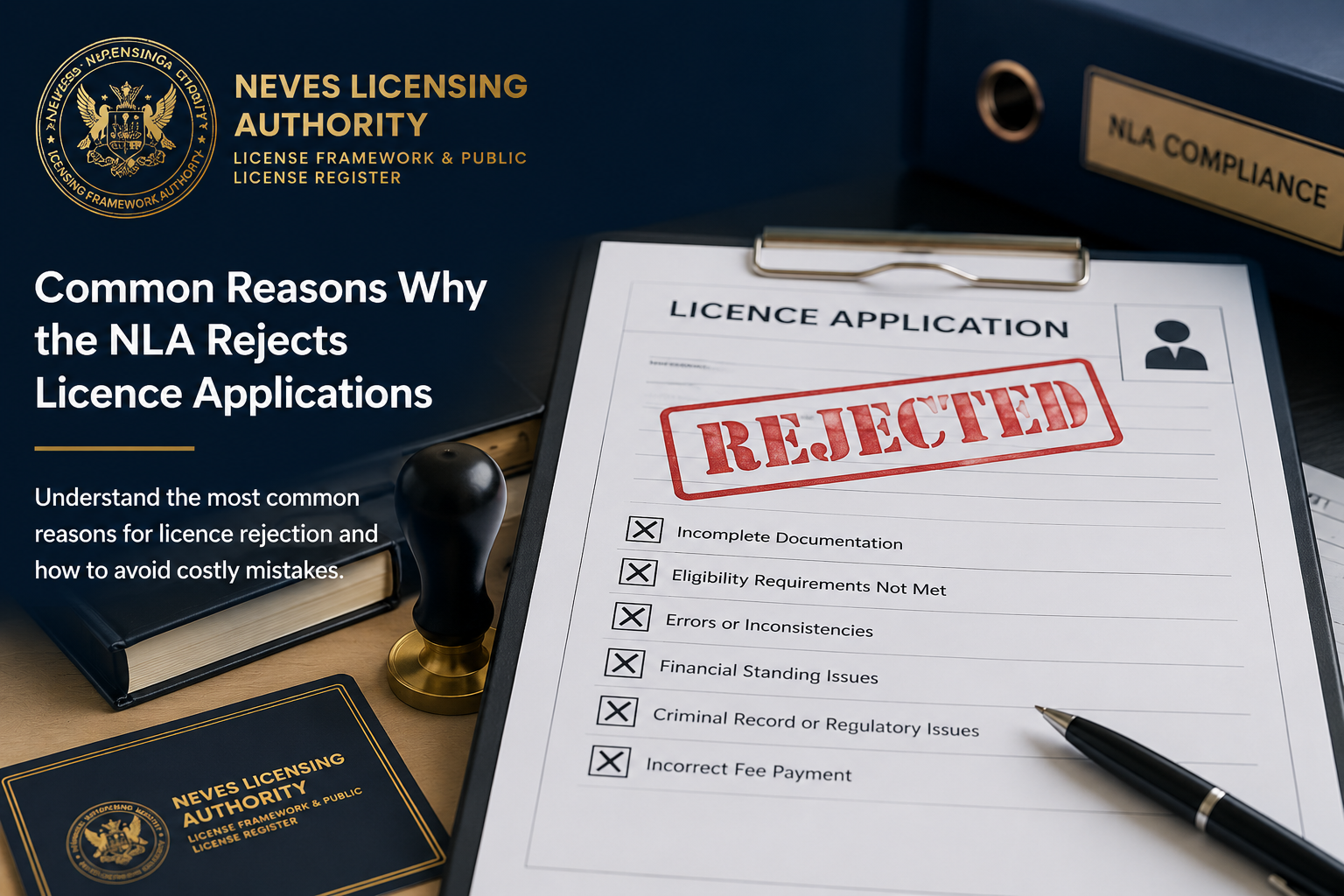
To enter the regulatory framework, applicants must meet defined eligibility and suitability standards. These requirements help regulators assess whether an entity is capable of operating responsibly.
Common entry requirements include:
- Transparent ownership and beneficial ownership disclosure
- Fit-and-proper assessment of directors and key personnel
- Adequate financial resources and operational capability
- Clear business plans and activity descriptions
Failure to meet these standards may result in application refusal or additional regulatory conditions.
Governance and Internal Control Expectations
Once licensed, entities operating in Neves are expected to maintain strong corporate governance and internal control systems. Governance is viewed as a key indicator of regulatory reliability.
Regulatory expectations typically include:
- Clearly defined management and decision-making structures
- Internal policies for compliance and risk management
- Proper segregation of duties
- Accurate record-keeping and reporting systems
Strong governance supports compliance and reduces regulatory risk.
Ongoing Compliance Obligations
The Neves regulatory framework emphasizes continuous compliance. Licensing is not a one-time approval but an ongoing regulatory relationship.
Licensed entities are generally required to:
- Submit periodic regulatory reports
- Renew licenses within prescribed timelines
- Maintain statutory and financial records
- Notify regulators of material changes
Ongoing compliance ensures that entities remain aligned with regulatory standards over time.
Anti-Money Laundering and Transparency Measures
AML compliance is a central pillar of the regulatory framework for licensed entities in Neves. Regulators require entities to implement systems that prevent misuse of corporate and financial structures.
Key AML and transparency obligations include:
- Customer due diligence and beneficial ownership verification
- Transaction monitoring and risk assessment
- Reporting of suspicious activities
- Retention of records for regulatory review
These measures protect the jurisdiction and enhance international trust.
Supervisory Role of the Regulator
Supervision is a continuous process within the Neves regulatory framework. Regulators monitor licensed entities to ensure compliance with laws, license conditions, and regulatory guidance.
Supervisory tools may include:
- Off-site monitoring through submitted filings
- On-site inspections and examinations
- Requests for information or clarification
- Risk-based assessments
This approach allows regulators to identify issues early and apply proportionate oversight.
Enforcement and Corrective Powers
Where non-compliance is identified, the regulatory framework provides enforcement mechanisms to correct behavior and protect the system.
Regulatory actions may include:
- Issuing warnings or compliance directives
- Imposing administrative penalties
- Requiring corrective or remedial actions
- Suspending or revoking licenses
Enforcement is designed to be proportionate, transparent, and based on statutory authority.
Transparency and Public Confidence
Transparency is a key feature of the Neves regulatory framework. Clear licensing rules, defined obligations, and verifiable licensing status help build public confidence.
Transparency is supported through:
- Public or official access to licence information
- Clear regulatory guidance and updates
- Documented decision-making processes
This openness enhances trust among clients, investors, and international partners.
Role of International Standards
The regulatory framework for licensed entities in Neves aligns with international best practices. This alignment helps ensure global acceptability and cross-border cooperation.
International alignment supports:
- Recognition by foreign regulators and institutions
- Stronger banking and payment relationships
- Reduced reputational and compliance risk
By adhering to global standards, Neves strengthens its regulatory credibility.
Benefits for Licensed Entities
Operating within a structured regulatory framework provides significant benefits to licensed entities. Compliance enhances reputation, stability, and operational certainty.
Key benefits include:
- Clear regulatory expectations
- Predictable supervision and enforcement
- Increased trust from stakeholders
- Long term sustainability
Licensed entities that comply with the framework are better positioned for growth and international engagement.
Conclusion
The Neves regulatory framework for licensed entities is comprehensive, structured, and compliancefocused. From licensing and governance to supervision and enforcement, the framework ensures that regulated activities are conducted transparently and responsibly.
For businesses, understanding and adhering to this framework is essential for lawful operations, regulatory approval, and long-term success in Neves. By maintaining high regulatory standards, Neves continues to strengthen its position as a credible and well-regulated jurisdiction.