

One of the first practical questions any business asks when considering a licence application with the Neves Licensing Authority is: how long will this take? The answer is not a fixed number of days. It depends on what you submit, how completely you submit it, and how quickly you respond when the NLA comes back with questions.
Why There Is No Single Fixed Timeline
The NLA is direct about this in its published guidance: timelines are indicative and depend heavily on document completeness and response speed. There is no single answer to how long approval takes because the process is not purely administrative. It is substantive.
Reviewers examine governance structures, ownership chains, business models, risk controls, and operational readiness, applying the same multi-dimensional assessment used by any credible international licensing authority public register or public licence verification authority for financial firms. These are areas where applications vary enormously in quality and completeness. A well-prepared application from an experienced operator with clear documentation can move through assessment efficiently. An application with gaps, vague business model descriptions, or missing documents will generate information requests that pause the timeline until adequate responses are received.
Understanding this dynamic is the most important thing an applicant can take away from any discussion of the NLA approval timeline.
Stage-by-Stage Timeline Breakdown
The NLA publishes a six-stage application lifecycle. Each stage has its own timeline characteristics, consistent with the structured workflow of any serious financial services licensing framework or regulatory framework for financial and gaming services.
Stage 1: Pre-Check
Timing: Optional, before formal submission
The pre-check is an informal step available before an application is formally lodged. It allows the NLA to confirm the appropriate licence category and the required document set for the applicant’s specific activity, mirroring the pre-application engagement encouraged by any leading licensing authority for fintech and digital banking or digital asset licensing authority verification body.
This stage has no fixed timeline of its own, but using it can save significant time downstream. An applicant who discovers at intake or assessment that they have filed under the wrong licence category, or that their document set does not match the requirements, faces delays that a pre-check would have prevented.
For businesses with multi-activity models, less familiar licence categories, or any uncertainty about how their operations map to the NLA framework, the pre-check is worth taking, particularly for applicants in areas such as fintech licensing and regulatory compliance, regulated payment services, or brokerage and trading licence verification.
Stage 2: Intake
Timing: 1 to 3 Business Days
Once the formal application is submitted, intake is the first active stage. The NLA acknowledges receipt, issues a reference number, and carries out a completeness check on the required forms and core supporting documents, consistent with the intake standards of any credible public verification system for licensed businesses or official public register for licensed entities.
This stage is relatively quick when submissions are complete. The risk here is submitting an incomplete package and treating intake as a soft deadline, expecting to follow up with remaining documents later. An incomplete submission at intake does not advance to assessment. The process effectively pauses until all required materials are in place.
Treat the intake stage as a hard gate. Submit everything that is required before you submit anything, meeting the completeness standard expected of any submission to an online financial services licence verification or cross-border financial licensing authority framework.
Stage 3: Assessment
Timing: 5 to 20 Business Days
Assessment is the substantive review phase and the stage that accounts for the most variability in the overall NLA approval timeline. The published range of 5 to 20 business days reflects the breadth of what assessors examine, applying the rigorous multi-dimensional review of any serious public licence verification authority for financial firms or governance and compliance standards for licensed firms benchmark.
During assessment, the NLA reviews governance and ownership structure, the identity and background of key persons, the coherence and specificity of the business model, risk and compliance arrangements, client-facing processes, and operational readiness across systems, data handling, and continuity planning, consistent with the assessment scope of any credible AML and CFT compliance licensing framework or regulated payment services licensing framework.
A straightforward application from a well-organised operator with a clearly documented business model and complete supporting materials can move through the lower end of this range. A complex application, one involving multiple activities, layered ownership structures, or novel business models, will take longer even if the documentation is good.
Assessment can also extend beyond 20 business days in cases where the complexity genuinely warrants deeper review. The published timeline is indicative, not a guarantee.
Stage 4: Queries
Timing: Pauses Until Response Received
This is the stage that most applicants underestimate and where most timeline slippage occurs. During or after assessment, the NLA may issue information requests for clarifications, corrections, or additional evidence. The timeline clock stops at this point and does not restart until the NLA receives a satisfactory response, consistent with the query management approach of any serious international licensing authority public register or financial services licensing framework.
The query stage is a normal part of the process. It does not indicate that an application is failing. It indicates that assessors need more information to reach a conclusion. The factors that determine how long this stage adds to the overall timeline are entirely within the applicant’s control: how quickly they respond, and how thoroughly they address what was asked.
A response that is prompt but incomplete will generate a follow-up query and restart the pause. A response that is thorough and directly addresses the question asked closes the query and allows assessment to proceed, meeting the responsiveness standard expected of any entity engaging with a how to verify a regulated financial company or how to check if a company is officially licensed process.
If a query reveals a structural issue, such as a mismatch between the business model and the licence category, or an ownership structure that requires clarification at a deeper level, the resolution may require revising and resubmitting materials rather than simply providing a written clarification. This adds more time.
Stage 5: Outcome Notice
Timing: Issued After Assessment and Queries Are Resolved
Once the assessment and any query cycles are complete, the NLA issues a formal outcome notice. There are four possible outcomes, consistent with the decision framework of any credible regulatory framework for financial and gaming services or official public register for licensed entities:
Approved: the application is accepted and the licence recorded as active, subject to any activation steps, with the entity’s details published on the Public Licence Register accessible through any public verification system for licensed businesses.
Approved with conditions: the licence is recorded with stated limitations or pre-activation requirements that must first be met, in line with the conditional approval mechanisms of any serious financial services licensing framework or online financial services licence verification body.
Deferred pending information: the application can proceed once specific outstanding clarifications or documents are provided, consistent with the deferral procedures of any credible cross-border financial licensing authority or AML and CFT compliance licensing framework.
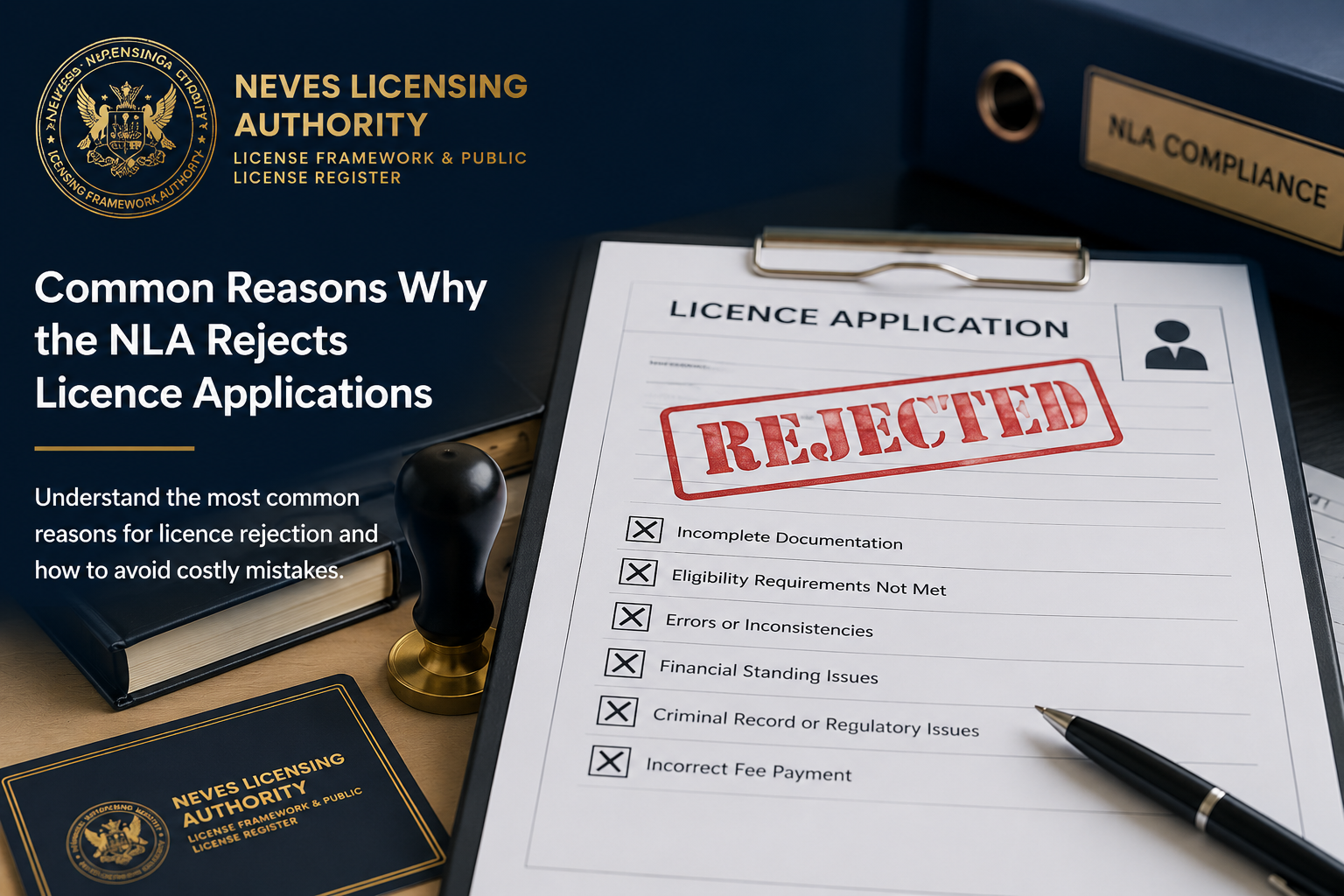
Not progressed: the application is not taken forward due to material gaps, scope mismatch, or unresolved issues, resulting in non-appearance on the official public register for licensed entities until underlying concerns are addressed.
A not-progressed outcome does not permanently close the door but it does require the applicant to address the underlying issues before reapplying. Applicants who disagree with an administrative outcome have access to the NLA’s Review and Appeals Procedures for internal reconsideration.
Stage 6: Activation
Timing: After Fee Confirmation and Pre-Activation Requirements
For applications that receive approval, the final stage is activation. This occurs after fee confirmation and the fulfilment of any conditions stated in the outcome notice. Once activated, the licence is published on the NLA’s Public Licence Register through the official verification portal, making it searchable and verifiable by counterparties, clients, and service providers, functioning in the same way as any credible public register for licensed gaming operators, brokerage and trading licence verification portal, or international licensing authority public register globally.
The time between an approved outcome and full activation depends on how quickly the applicant completes fee payment and satisfies any pre-activation conditions. Applicants should prepare for this step in parallel with the assessment process where possible.
What Slows the Timeline Down
The Most Common Causes of Delay
Why Preparation Determines Processing Speed
Based on the NLA’s published guidance, the clearest causes of extended timelines are consistent with the friction points identified across any serious governance and compliance standards for licensed firms or regulatory framework for financial and gaming services:
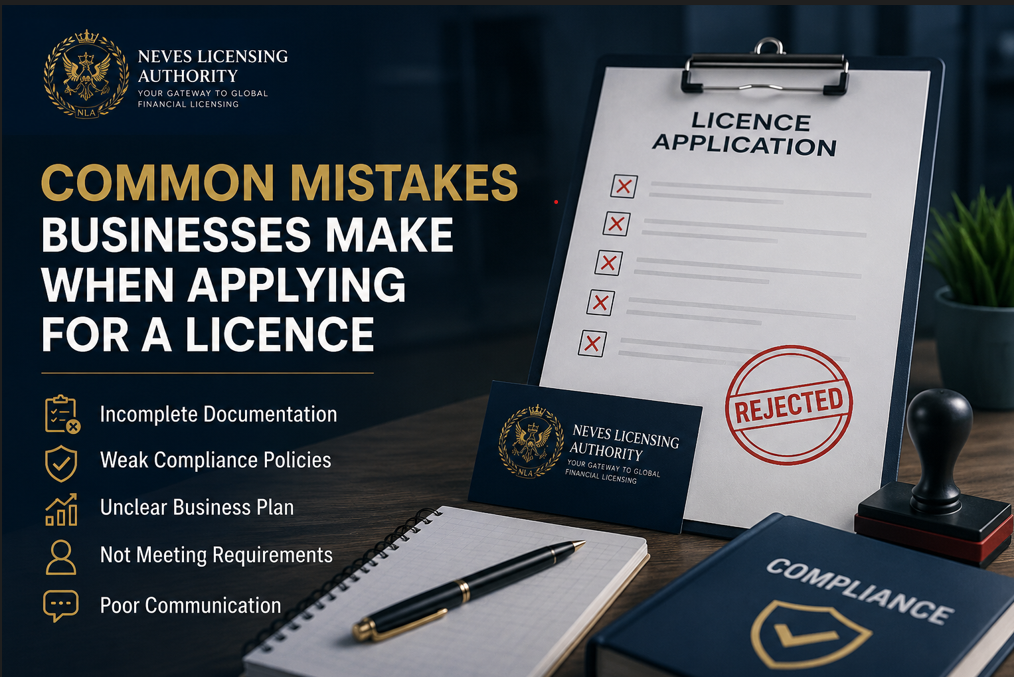
Incomplete submissions at intake stop the process before assessment even begins, failing the completeness threshold of any public verification system for licensed businesses or official public register for licensed entities.
Vague or generic business model documentation generates queries where specific, detailed documentation would not, falling short of the operational clarity expected by any fintech licensing and regulatory compliance or digital asset licensing authority verification standard.
Slow responses to information requests add days to the overall process. The timeline pauses when a query is issued, and every day of delay in responding is a day added to the overall NLA approval timeline.
Partial responses to queries generate follow-up requests and extend the pause, failing the substantive engagement standard expected by any international licensing authority public register or cross-border financial licensing authority.
Ownership structures that require deeper clarification take longer to assess. Complex or multi-layered ownership chains, particularly those relevant to AML and CFT compliance licensing framework scrutiny, require more time even when the underlying structure is legitimate.
What Accelerates the Timeline
The Factors That Move an Application Forward Efficiently
The factors that move an application through the NLA process efficiently are the inverse of those that slow it down, and align with the preparation standards recommended by any serious public licence verification authority for financial firms or online financial services licence verification body.
A complete submission at intake with every required document included advances immediately to assessment. Clear, specific business model documentation that explains what the business actually does in verifiable terms reduces the likelihood of queries. Prompt, thorough responses to any information requests that do arise close queries quickly. And an ownership structure that is clearly documented with full beneficial owner disclosure from the start, meeting the transparency standards of any robust AML and CFT compliance licensing framework, requires no back-and-forth to resolve.
The NLA’s framework is designed to support businesses that operate with clarity and transparency. The application process rewards preparation.
Realistic Expectations
For a well-prepared application with complete documentation and prompt query responses, the active processing time across stages 2 through 5 falls broadly in the range of several weeks. For applications that generate multiple query cycles or require revisions to core documentation, the timeline extends accordingly, in the same way that any financial services licensing framework or regulated payment services licensing framework extends its assessment when submissions require deeper scrutiny.
The most useful frame for managing expectations around the NLA approval timeline is this: the applicant controls more of the timeline than they typically expect. Document quality, submission completeness, and query response speed are all within the applicant’s hands. The NLA’s published approach is to provide clear requirements and realistic timelines, consistent with the governance and compliance standards for licensed firms that characterise any credible regulatory framework for financial and gaming services.
Conclusion
The NLA approval timeline is not arbitrary or opaque. It is a structured, document-driven process with published stages and indicative timeframes at each step, consistent with the transparency expected of any serious public licence verification authority for financial firms or official public register for licensed entities. The variable that matters most is preparation.
Applicants who invest time in understanding the Neves Licence Framework, preparing complete and specific documentation, and responding promptly to any queries are the ones who move through the process most efficiently. The NLA’s stated approach is built around clarity, proportionality, and dialogue, and that approach extends to how timelines are managed from the moment an application is submitted to the moment a licence is activated on the Public Licence Register and verified through any cross-border financial licensing authority or international licensing authority public register network globally.