
The fintech industry has transformed how consumers and businesses access financial services. From digital payments and electronic money solutions to digital banking and blockchain based platforms, fintech companies are increasingly seeking opportunities beyond their domestic markets. However, international expansion often requires more than innovative technology it requires a structured licensing framework that demonstrates operational readiness, governance standards, and compliance commitments.
The Neves Licensing Authority (NLA) provides a licensing framework designed to support organizations operating in financial services, fintech, digital assets, payments, and related sectors. Through its structured authorization pathways and public verification mechanisms, NLA offers fintech firms a framework that may help strengthen credibility when engaging with clients, partners, and service providers.
Why Licensing Matters for Fintech Expansion
As fintech businesses enter new markets, they frequently encounter questions from banks, payment providers, investors, and institutional partners regarding regulatory status and governance arrangements.
A recognized licensing framework can help demonstrate:
- Commitment to compliance standards
- Transparent ownership structures
- Defined governance processes
- Risk management procedures
- AML/CFT policies and controls
For many fintech firms, these elements become increasingly important as transaction volumes grow and cross-border operations become more complex.
The NLA Licensing Framework
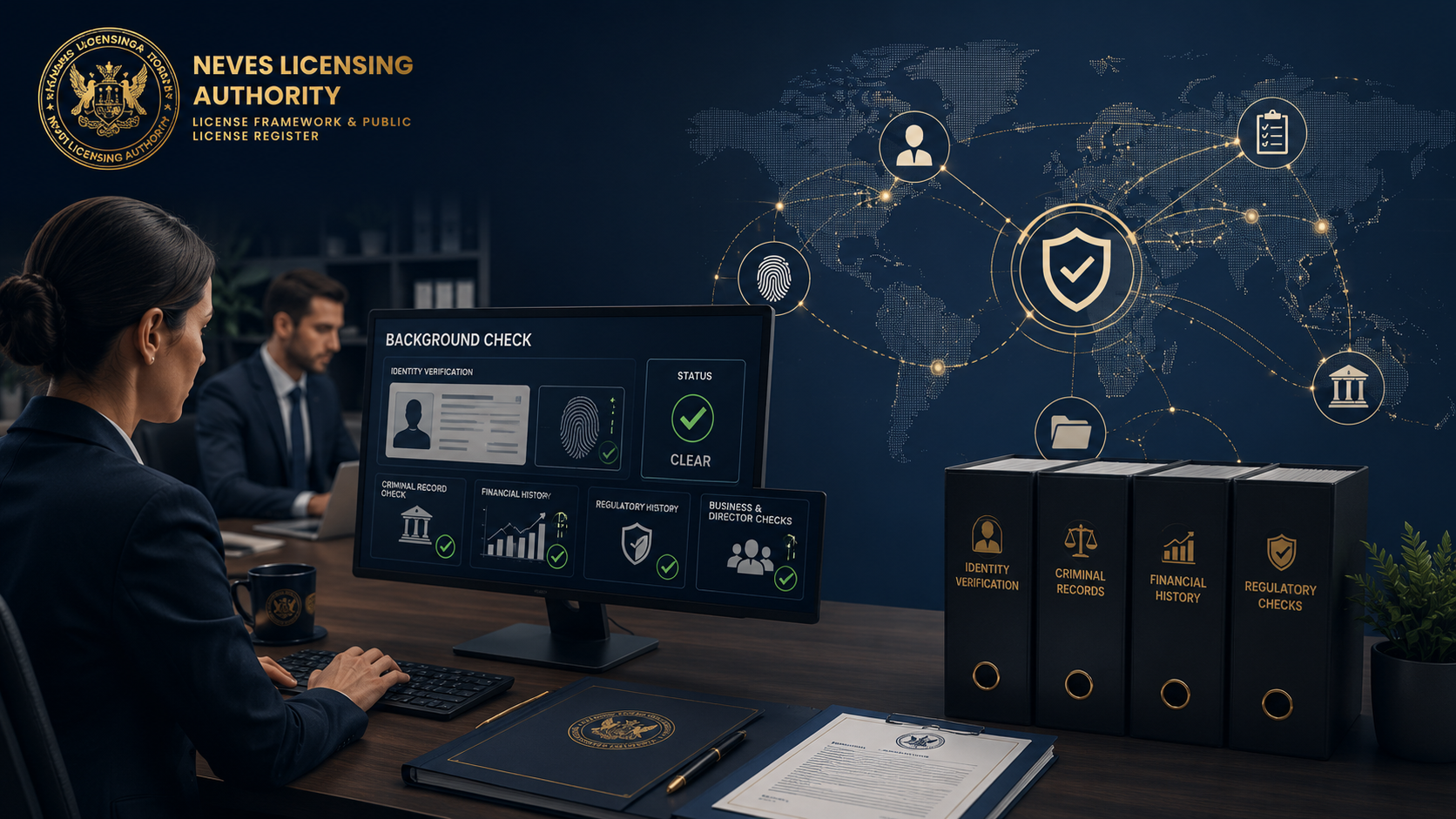
The Neves Licensing Authority operates a structured licensing framework that organizes activities through specialized licensing categories. The framework is designed to provide clear authorization pathways, verification systems, and public visibility through its licensing structure.
Key framework features include:
Structured Authorization Pathways
Rather than applying a one-size-fits-all approach, NLA categorizes activities according to business models and operational functions. This helps applicants identify the licensing pathway most relevant to their proposed activities.
Public Verification
A significant component of the framework is the availability of public verification mechanisms. This can assist counterparties in confirming licensing status and understanding how a business fits within the broader licensing ecosystem.
Governance-Oriented Standards
The framework emphasizes governance, transparency, ownership disclosure, and operational readiness. These areas are frequently examined by banks, payment providers, and institutional partners when evaluating fintech businesses.
Benefits for Internationally Focused Fintech Firms
Enhanced Credibility
Licensing can provide fintech companies with an additional layer of institutional credibility. Potential customers and business partners often seek assurance that a company operates within a structured compliance framework.
Improved Business Partnerships
Financial institutions typically evaluate governance structures and compliance procedures before establishing partnerships. Demonstrating participation in a licensing framework may support discussions with banking and payment infrastructure providers.
Operational Structure
Expansion into multiple jurisdictions often requires stronger internal controls and documentation. The licensing process can encourage organizations to formalize governance procedures, compliance programs, and risk management practices.
Long-Term Growth Planning
As fintech companies scale, investors and strategic partners frequently prioritize businesses with documented operational frameworks. Licensing can become part of a broader growth strategy designed to support sustainable expansion.
Fintech Trends Driving Licensing Demand
The global fintech ecosystem continues to evolve rapidly. Areas such as:
- Digital banking
- Payment processing
- Electronic money services
- Digital asset platforms
- Embedded finance
- Financial technology infrastructure
are increasingly dependent on transparent compliance practices and structured governance models. Industry research also highlights growing emphasis on security, risk management, and regulatory alignment within modern fintech operations.
Conclusion
International fintech expansion requires more than technological innovation. Companies must also demonstrate transparency, governance, and operational readiness. The Neves Licensing Authority provides a structured framework that can help fintech organizations establish a clearer compliance profile while supporting growth objectives.
For firms seeking to expand internationally, licensing may serve as an important component of a broader strategy focused on credibility, trust, and long-term operational sustainability.