If you’re planning to apply for a Neves license, understanding the full cost picture before you start can save you a lot of surprises.
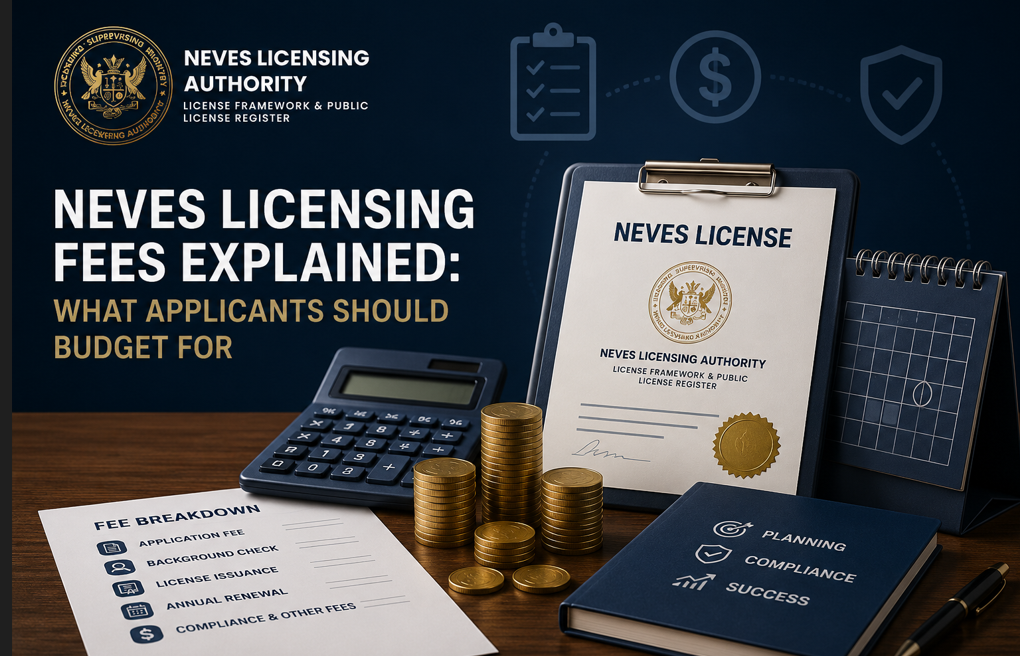
Neves licensing fees are the charges associated with applying for, obtaining, and maintaining a license under the Neves regulatory framework. These fees cover the cost of processing your application, conducting background and compliance checks, issuing the official license document, and keeping it valid year after year.
Think of these costs as falling into two buckets: one-time upfront fees you pay when you first apply, and ongoing fees you pay to keep your license active over time. Many applicants only plan for the first bucket and then get caught off guard by renewal and compliance costs down the line.
The Main Fee Categories
1. Application Processing Fee
This is the very first fee you’ll pay. It covers the cost of reviewing your application, verifying your documents, and confirming you meet the basic eligibility criteria. This fee is typically non-refundable, even if your application is ultimately rejected, so it pays to make sure your paperwork is in order before you submit.
2. Background Check and Verification Fee
Most Neves licensing processes require some form of due diligence, whether that’s a criminal background check, a financial history review, or verification of professional credentials. This fee is charged separately from the processing fee and can vary depending on how thorough the check needs to be for your license category.
3. License Issuance Fee
Once your application is approved, you’ll pay an issuance fee to receive your actual license. This is the cost of generating and officially issuing the document that grants you permission to operate. Some jurisdictions fold this into the application fee, but others keep it separate, so always read the fee schedule carefully.
4. Annual Renewal Fee
Neves licenses are not a one-time purchase. Most require annual renewal to remain valid. The renewal fee is typically lower than the original application fee, but it adds up over time. Budget for this as a recurring yearly expense from the moment you receive your license.
5. Late Fees and Penalty Charges
If you miss a renewal deadline or fail to submit required documentation on time, expect to pay a late fee on top of your standard renewal. In some cases, operating on an expired license can result in larger financial penalties or even suspension of your license altogether.
Hidden Costs Applicants Often Miss
The official fee schedule tells only part of the story. Here are some costs that regularly catch applicants off guard:
Professional preparation fees if you hire a consultant or legal advisor to assist with your application. Document translation or notarization costs if your supporting paperwork needs to be certified. Courier or expedited processing charges if you need your license faster than the standard timeline. Amendment fees if you need to update your license details, such as a change of address or business structure. Re-application fees if your initial application is denied and you choose to reapply.
Some applicants underestimate costs by only checking the base application fee. Always request a full fee schedule, including renewal, amendment, and penalty charges, before you budget.
How to Build a Realistic Budget
A smart approach to budgeting for Neves licensing fees is to think in three time horizons: what you’ll spend before approval, what you’ll spend at approval, and what you’ll spend every year afterward.
Pre-approval costs cover your application fee, background check, and any professional help you bring in. These tend to be the largest upfront expenses. Approval costs include the issuance fee and any final document preparation charges, a one-time hit once you get the green light. Annual ongoing costs include your renewal fee, any compliance documentation, and any amendments you need to make along the way.
Adding a contingency buffer of around 10 to 15 percent on top of your expected total is a sensible safety net. Licensing processes rarely go exactly to plan, and having a small reserve prevents delays caused by unexpected charges.
Tips for Keeping Your Neves Licensing Costs Under Control
Apply once, apply well
The best way to avoid paying duplicate fees is to get your application right the first time. Take the time to read all requirements carefully, gather every document you need, and double-check your submission before you send it in. A rejected application doesn’t just cost money, it also costs time.
Set renewal reminders
Late fees are entirely avoidable. Set a calendar reminder at least 60 days before your renewal deadline so you have plenty of time to prepare your paperwork and make payment without rushing.
Keep your records up to date
Amendments, like updating your address or changing key personnel, come with their own fees. While you can’t always avoid these changes, clustering updates together rather than submitting them one at a time can sometimes reduce the total number of amendment fees you pay.
Many licensing bodies publish a full fee schedule on their official website. Download it early, read the small print, and use it as your budgeting checklist before you spend a cent.
Conclusion
Neves licensing fees are manageable when you plan for them properly. The key is to look at the full picture, not just the headline application fee, but also background checks, issuance costs, annual renewals, and the occasional unexpected charge. Build a budget that covers all three time horizons, keep a contingency reserve, and stay on top of your renewal deadlines. Do that, and your licensing journey should be straightforward and free of financial surprises.
Whether you’re applying for the first time or renewing an existing license, treating the cost of compliance as an ongoing business investment rather than a one-off hurdle will put you in a much stronger position from the start.