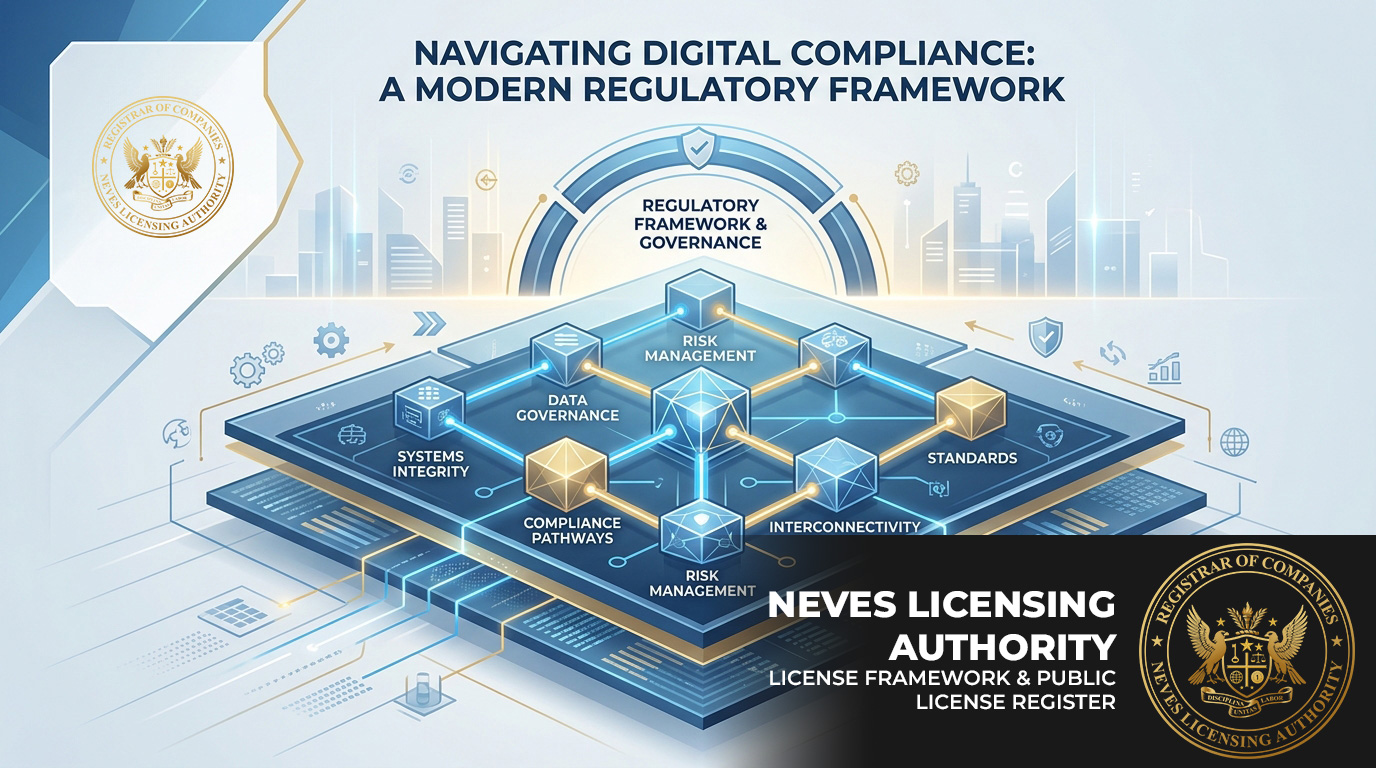
Neves has emerged as a jurisdiction that places increasing emphasis on regulatory oversight, institutional accountability, and adherence to international compliance standards. In recent years, the country has strengthened its licensing framework across financial services, corporate entities, and regulated professions to ensure transparency, ethical conduct, and alignment with global anti-financial crime expectations. Licence suspension and revocation procedures play a central role in maintaining regulatory integrity and protecting the financial ecosystem.
Understanding how licences can be suspended or revoked in Neves is critical for businesses, financial institutions, compliance officers, and professionals operating within the jurisdiction. These procedures are closely linked to financial crime compliance Neves standards, particularly in areas related to anti-money laundering, counter-terrorist financing, fraud prevention, and corporate governance.
Regulatory Framework Governing Licensing in Neves
Licensing in Neves is governed by sector-specific regulatory authorities, which may include financial services commissions, corporate registrars, and professional oversight bodies. These regulators are empowered to issue, monitor, suspend, and revoke licences based on statutory obligations and regulatory guidelines.
The legal framework typically outlines the conditions under which a licence is granted, the ongoing compliance obligations of the licensee, and the enforcement mechanisms available to regulators. Financial institutions, trust service providers, investment firms, payment service operators, and certain professional services are subject to enhanced scrutiny due to their exposure to financial crime risks.
Financial crime compliance Neves requirements are embedded within licensing laws, making compliance failures a primary trigger for regulatory action.
Grounds for Licence Suspension in Neves
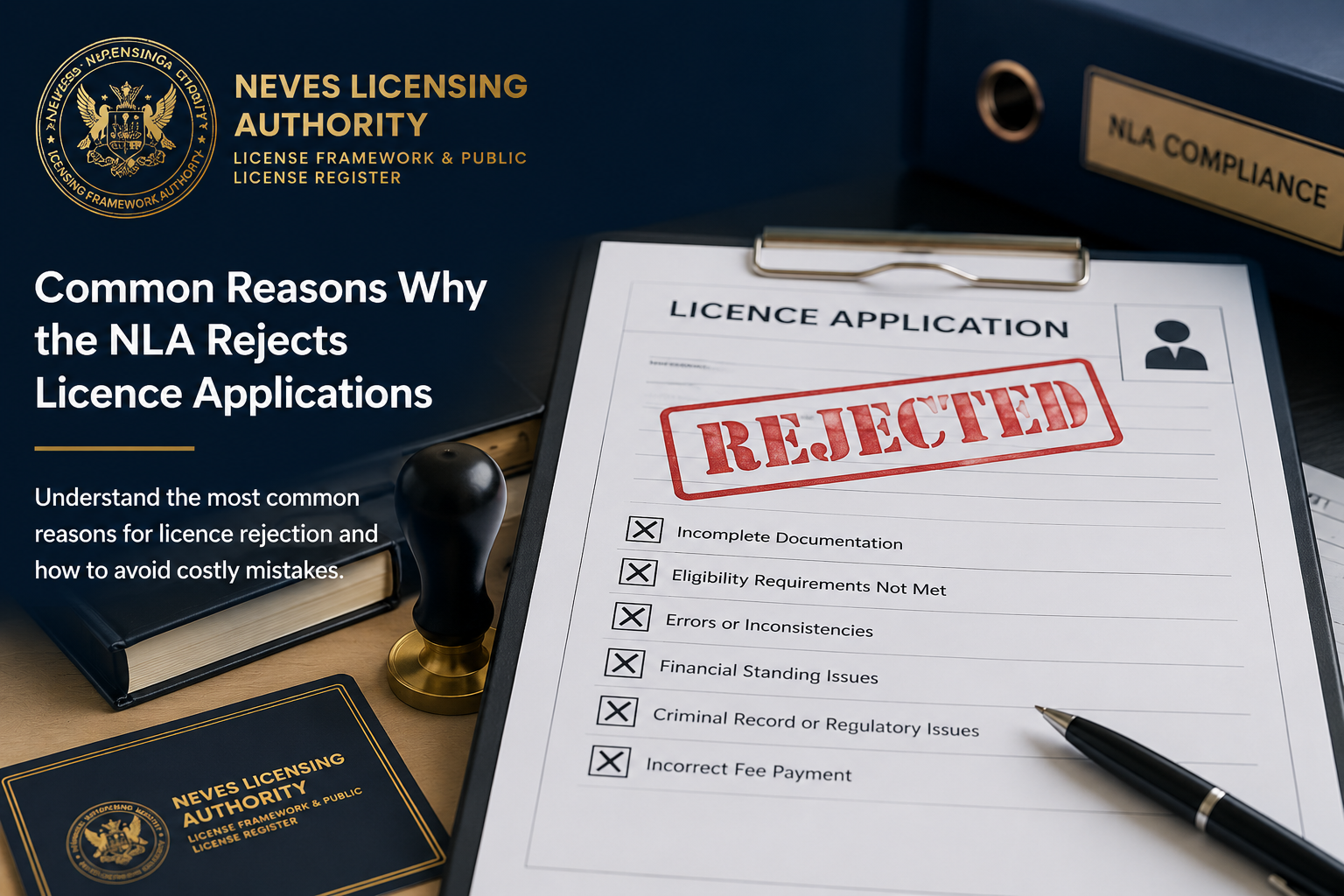
Licence suspension is generally considered a temporary regulatory action taken when concerns arise that require immediate intervention but may be rectifiable. Regulators in Neves may suspend a licence if there is reasonable suspicion of non-compliance, regulatory breaches, or operational deficiencies that pose a risk to clients, the financial system, or public trust.
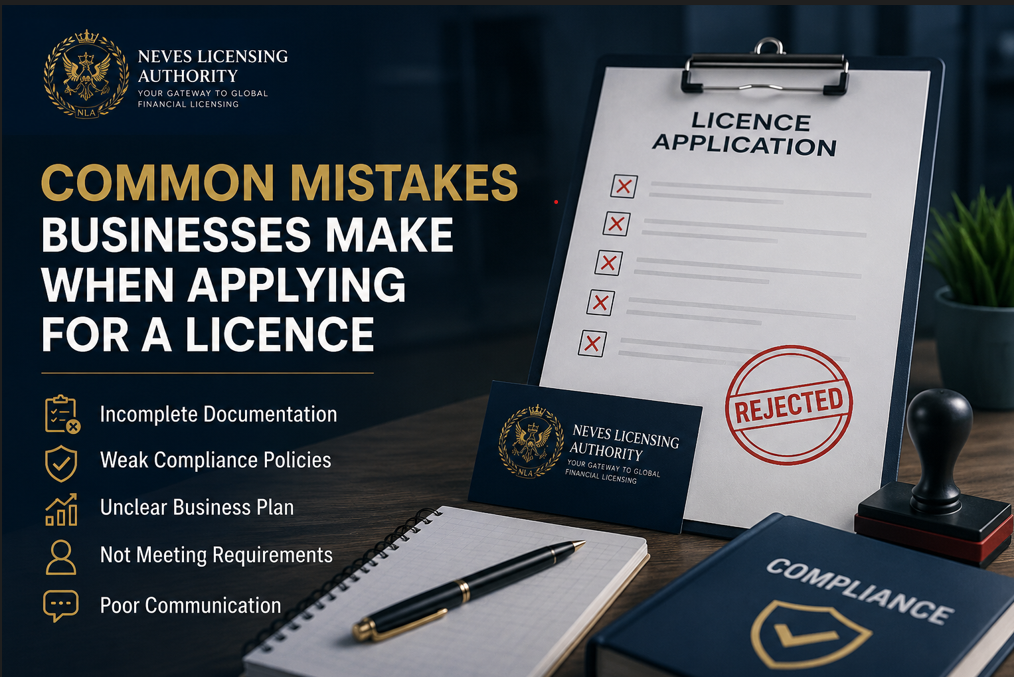
Common grounds for suspension include failure to implement adequate anti-money laundering and counter-terrorist financing controls, incomplete or misleading regulatory filings, breaches of licensing conditions, or governance failures. In many cases, suspension is used to compel corrective action while preventing further regulatory harm.
From a financial crime compliance Neves perspective, inadequate customer due diligence, failure to report suspicious transactions, or weak internal controls are frequently cited as reasons for suspension.
Immediate and Preventive Nature of Suspension
Suspension is often applied as a preventive measure rather than a punitive one. Regulators may act swiftly if they believe continued operations could facilitate financial misconduct or expose clients to undue risk. During a suspension period, the licensee may be prohibited from conducting regulated activities, onboarding new clients, or handling client funds.
The suspension notice typically outlines the specific breaches identified, the scope of restrictions imposed, and the steps required for reinstatement. This approach allows regulators to protect the system while giving the licensee an opportunity to demonstrate remediation.
Licence Revocation as a Regulatory Enforcement Tool
Licence revocation represents the most severe regulatory action in Neves. Unlike suspension, revocation permanently removes the legal authority to conduct regulated activities. Revocation is generally imposed when breaches are serious, repeated, or demonstrate a fundamental failure to comply with regulatory and legal obligations.
Regulators may revoke a licence if a licensee is found to have engaged in money laundering, fraud, terrorist financing, or other serious financial crimes. Persistent non-compliance with regulatory directives, obstruction of regulatory investigations, or submission of false information may also lead to revocation.
Financial crime compliance Neves standards are central to revocation decisions, as regulators aim to ensure that entities operating in the jurisdiction meet international expectations for integrity and transparency.
Due Process and Regulatory Fairness in Neves
Neves follows due process principles in licence suspension and revocation procedures. Before taking final action, regulators typically provide the licensee with formal notice outlining the alleged violations and supporting evidence. Licensees are often given an opportunity to respond, provide explanations, or submit remedial action plans.
In cases involving immediate risk, regulators may impose an interim suspension before completing a full investigation. However, even in such cases, licensees retain the right to make representations and challenge findings within prescribed timelines.
This balance between enforcement and fairness supports regulatory credibility while reinforcing financial crime compliance Neves obligations.
Role of Investigations and Compliance Audits
Investigations play a critical role in determining whether suspension or revocation is warranted. Regulators may conduct on-site inspections, request transaction records, review compliance policies, and interview key personnel. Independent compliance audits may also be mandated to assess the adequacy of internal systems and controls.
Audit findings often influence the severity of regulatory action. Where deficiencies are technical or procedural, regulators may opt for suspension with corrective conditions. Where audits reveal systemic compliance failures or deliberate misconduct, revocation becomes more likely.
For regulated entities, proactive compliance audits aligned with financial crime compliance Neves standards can significantly reduce enforcement risk.
Impact of Suspension and Revocation on Businesses
The consequences of licence suspension or revocation in Neves can be severe. Suspended entities may experience operational shutdowns, loss of revenue, reputational damage, and client attrition. Revocation can result in permanent market exit, legal liabilities, and long-term reputational harm across other jurisdictions.
In regulated financial sectors, enforcement actions may also trigger reporting obligations to international regulators or correspondent institutions. This interconnected risk highlights the importance of maintaining robust compliance frameworks and transparent regulator engagement.
Appeals and Legal Remedies Available in Neves
Licensees facing suspension or revocation in Neves generally have access to appeal mechanisms. Appeals may be submitted to an administrative tribunal, regulatory review panel, or court, depending on the governing legislation.
Appeals typically focus on procedural fairness, evidentiary standards, or proportionality of regulatory action. However, appeals do not always suspend enforcement unless explicitly granted, meaning compliance obligations and restrictions may remain in effect during the appeal process.
Strong documentation and demonstrable adherence to financial crime compliance Neves requirements are essential when pursuing regulatory remedies.
Reinstatement and Reapplication After Suspension
In cases of suspension, regulators may allow reinstatement once corrective actions are completed. This may include implementing enhanced compliance controls, appointing qualified compliance officers, conducting staff training, or submitting periodic compliance reports.
Reinstatement decisions are based on evidence that deficiencies have been addressed and that the licensee can operate without posing regulatory risk. Transparency, cooperation, and timely remediation significantly improve reinstatement prospects.
Revocation, however, often requires a fresh application after a defined period, if reapplication is permitted at all.
Importance of Compliance Culture and Governance
A strong compliance culture is one of the most effective safeguards against licence suspension or revocation. Regulators in Neves increasingly assess not only written policies but also how compliance is embedded within daily operations and leadership decision-making.
Effective governance structures, independent compliance functions, and board-level oversight demonstrate commitment to financial crime compliance Neves principles. Entities that treat compliance as a strategic priority rather than a regulatory formality are less likely to face enforcement action.
Alignment with International Financial Crime Standards
Neves aligns its licensing enforcement practices with international standards set by bodies such as the Financial Action Task Force. This alignment ensures that the jurisdiction remains credible, cooperative, and trusted in global financial networks.
Licence suspension and revocation procedures serve as tools to enforce these standards and deter misuse of the financial system. For international businesses operating in Neves, understanding this global context is essential for long-term sustainability.
Conclusion
Licence suspension and revocation procedures in Neves reflect a regulatory environment that prioritizes integrity, accountability, and financial system protection. These mechanisms are not merely punitive but are designed to enforce compliance, deter misconduct, and maintain international confidence in the jurisdiction.
For businesses and professionals, strict adherence to financial crime compliance Neves requirements is not optional but foundational. Proactive compliance management, transparent regulator engagement, and strong governance structures are essential to maintaining licensing status and operational continuity.
By understanding the regulatory expectations and enforcement processes, organizations can better manage risk, respond effectively to regulatory scrutiny, and operate confidently within Neves’ evolving compliance landscape.