Applying for a business or financial licence is a detailed process that requires proper planning, documentation, compliance preparation, and regulatory understanding. Many businesses face delays, rejections, or additional regulatory scrutiny because of avoidable errors during the application process. Understanding common licensing application mistakes can help businesses prepare properly, speed up approvals, and improve the chances of obtaining a licence successfully. Whether applying for a financial services licence, fintech licence, forex licence, fund management licence, or payment services licence, avoiding these mistakes is critical.
Lack of Understanding of Licensing Requirements
One of the most common licensing application mistakes is not fully understanding the licensing requirements before applying. Many businesses submit applications without clearly knowing:
- Which licence they need
- Capital requirements
- Compliance requirements
- Documentation requirements
- Regulatory obligations
- Ongoing reporting requirements
Applying for the wrong licence or submitting incomplete documentation can lead to delays or rejection.
Poorly Prepared Business Plan
Regulators carefully review business plans to understand the company’s business model, operations, revenue sources, and risk management approach. A weak business plan is a major reason why licence applications are delayed or rejected. Common business plan mistakes include:
- Unclear business model
- Unrealistic financial projections
- No risk management strategy
- No compliance framework
- Poor operational structure
- Lack of market analysis
A strong business plan should clearly explain how the business will operate, generate revenue, manage risks, and maintain compliance.
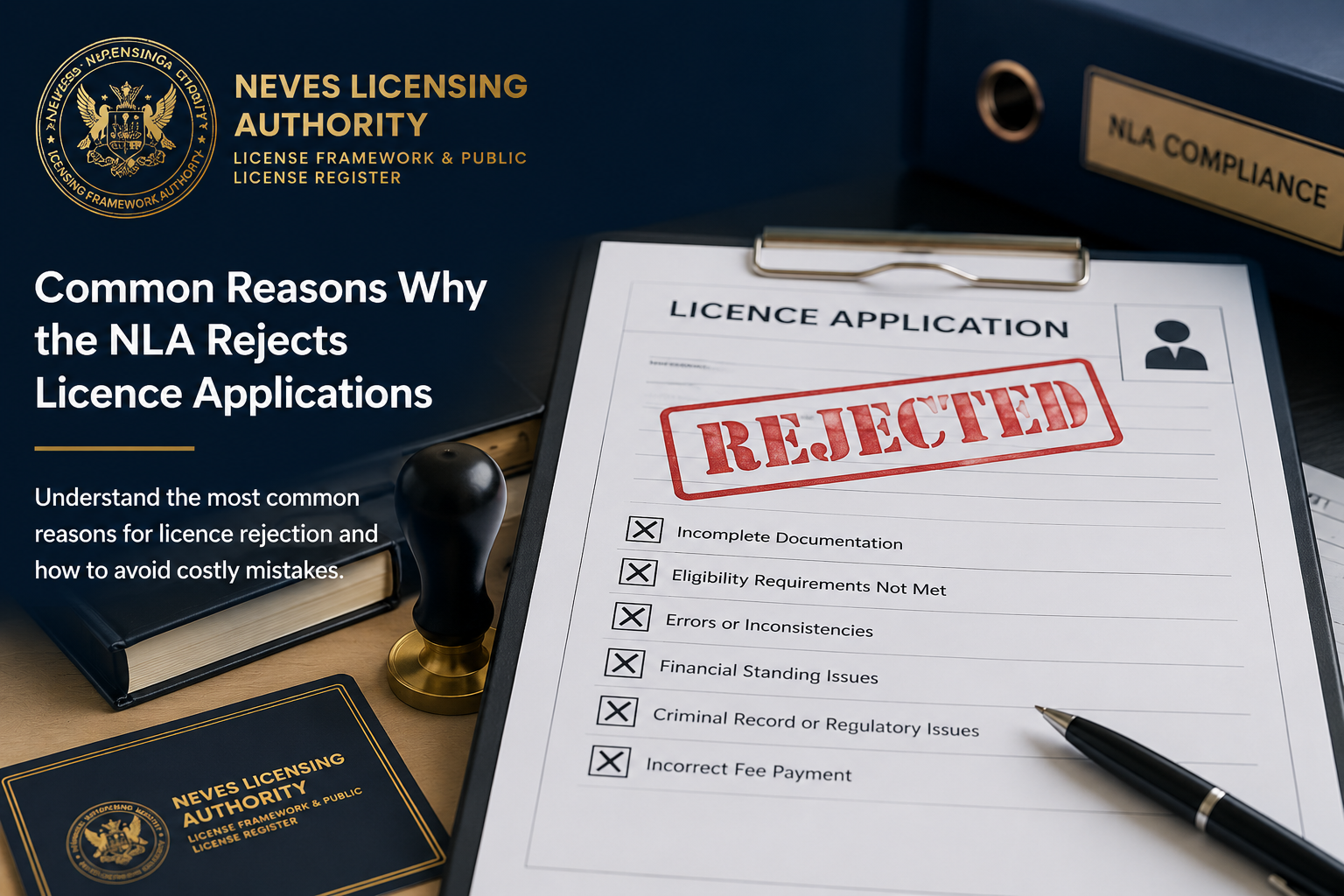
Incomplete Documentation
Incomplete documentation is one of the biggest licensing application mistakes. Regulators require detailed documentation for due diligence and compliance review. Missing documents can delay the entire licensing process. Common missing documents include:
- Corporate documents
- Director and shareholder identification
- Proof of address
- Source of funds documents
- Compliance manuals
- AML and KYC policies
- Financial projections
- Organizational structure chart
Before submitting an application, businesses should ensure that all required documents are complete and properly formatted.
Weak AML and Compliance Policies
For financial services and regulated businesses, AML (Anti-Money Laundering) and compliance documentation is extremely important. Many applications are delayed because compliance manuals are too basic or copied from generic templates. Regulators expect:
- Detailed AML policy
- KYC procedures
- Risk assessment framework
- Transaction monitoring procedures
- Suspicious activity reporting procedures
- Compliance officer responsibilities
Weak compliance documentation signals regulatory risk and can result in application rejection.
Unclear Corporate Structure
Regulators conduct due diligence on company ownership and beneficial owners. If the corporate structure is complex, unclear, or poorly documented, the regulator may delay the application. Common corporate structure mistakes include:
- Not declaring beneficial owners
- Complex ownership without explanation
- Missing shareholder documents
- No organizational structure chart
Businesses should provide a clear corporate structure showing shareholders, directors, and ultimate beneficial owners.
Not Meeting Capital Requirements
Many licences require minimum capital requirements. Some businesses apply for licences without meeting capital requirements or without proof of funds. Regulators usually require:
- Bank statements
- Proof of capital
- Source of funds documentation
- Financial projections
Failure to meet capital requirements can result in immediate rejection of the licence application.
Choosing the Wrong Jurisdiction
Another common licensing application mistake is choosing the wrong jurisdiction for the business model. Not all jurisdictions are suitable for every type of financial service or business activity. Businesses should consider:
- Licensing requirements
- Capital requirements
- Compliance obligations
- Regulatory reputation
- Banking support
- Operational costs
Choosing the right jurisdiction is an important part of the licensing strategy.
Poor Communication with Regulators
Some businesses delay their own licensing process by not responding to regulator queries on time or by providing incomplete responses. During the application process, regulators may request:
- Additional documents
- Clarifications
- Updated financial projections
- Compliance details
- Corporate structure explanation
Delays in responding to regulators can significantly slow down the licensing process.
Lack of Compliance Officer or Compliance Team
Many regulated businesses are required to appoint a compliance officer or compliance team before obtaining a licence. Some companies apply without appointing qualified compliance personnel, which can delay approval. Regulators want to see that the company has a compliance structure in place before granting a licence.
Unrealistic Timeline Expectations
Many businesses expect licences to be approved very quickly. However, licensing is a regulatory process that includes due diligence, compliance review, background checks, and regulatory approvals. Unrealistic expectations can lead to poor planning and operational delays. Businesses should plan for licensing timelines that may take several weeks or months depending on the licence type and jurisdiction.
Not Preparing for Ongoing Compliance
Obtaining a licence is not the end of the regulatory process. Many businesses focus only on getting the licence and do not prepare for ongoing compliance requirements such as:
- Annual reporting
- Financial statements
- AML compliance
- Regulatory filings
- Audits
- Record keeping
- Compliance reviews
Regulators prefer companies that demonstrate long-term compliance planning, not just licence approval.
How to Avoid Licensing Application Mistakes
Businesses can improve their chances of licence approval by following these steps:
- Understand licensing requirements before applying
- Prepare a detailed business plan
- Prepare complete documentation
- Develop strong AML and compliance policies
- Maintain a clear corporate structure
- Meet capital requirements
- Choose the right jurisdiction
- Respond quickly to regulator requests
- Appoint a compliance officer
- Prepare for ongoing compliance
Proper planning and preparation can significantly improve the chances of successful licence approval.
Conclusion
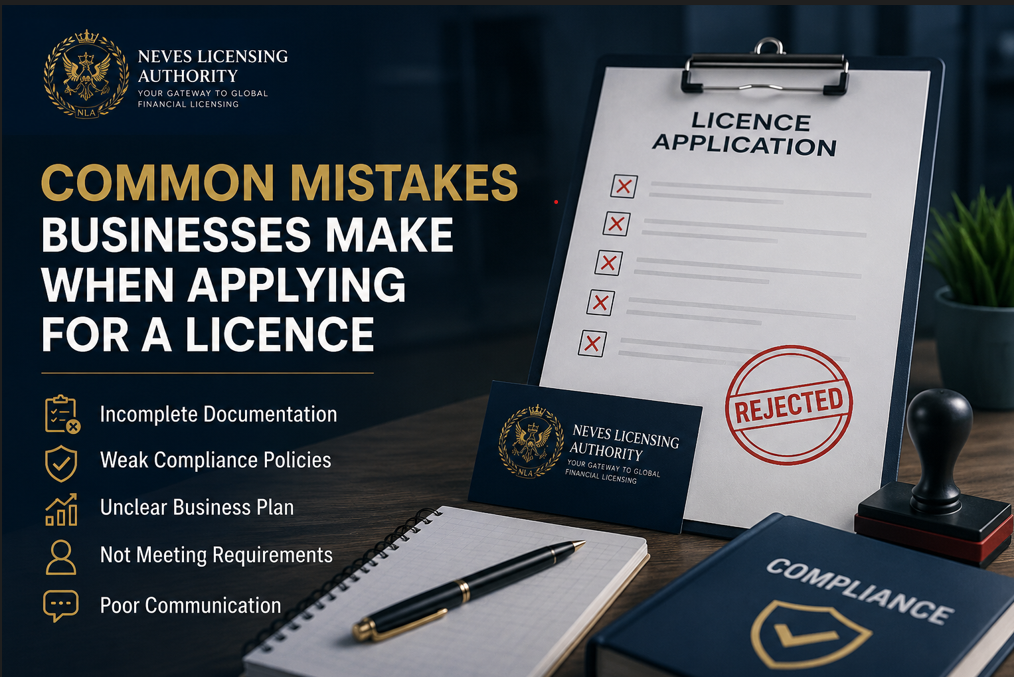
Licensing application mistakes can cause delays, additional costs, or even rejection of licence applications. The most common mistakes include incomplete documentation, weak compliance policies, unclear corporate structure, poor business plans, and not meeting capital requirements. Businesses applying for financial or regulatory licences should carefully prepare documentation, compliance frameworks, and corporate structures before submitting applications. Avoiding these licensing application mistakes helps businesses obtain licences faster, maintain regulatory compliance, and operate successfully in regulated industries.