Skip to content


When people interact with businesses in regulated industries, they are often doing so without the specialist knowledge needed to assess whether that business is operating safely, honestly, or competently. A patient visiting a licensed healthcare provider, a customer using a licensed financial service, or a homeowner hiring a licensed contractor is placing a significant degree of trust in the licensing system to have done that assessment on their behalf. This is precisely why the work of the National Licensing Authority matters beyond the businesses it regulates. It matters to every consumer who deals with those businesses.
Consumer protection is not a secondary function of the NLA. It is one of the primary reasons the authority exists.
The Relationship Between Licensing and Consumer Protection
Why Licensing Serves the Public Interest
Licensing is often discussed in terms of what it requires from businesses. But its deeper purpose is what it delivers to the public. When the NLA grants a licence, it is making a declaration that the holder has met a defined standard of competence, integrity, and operational fitness. That declaration is a form of assurance to every consumer who subsequently deals with that licence holder.
Without that assurance, consumers would need to carry out their own due diligence every time they engaged with a service provider in a regulated sector. In practice, most people cannot do this. They do not have access to the relevant information, the technical expertise to interpret it, or the time to conduct meaningful assessments. The licensing system exists to do this work on their behalf.
The NLA as a Standing Safeguard
The NLA functions as a standing safeguard within regulated markets. Its presence means that businesses seeking to operate in those markets must demonstrate their fitness before being permitted to do so, and must maintain that fitness on an ongoing basis if they wish to continue. Consumers benefit from this safeguard whether they are aware of it or not.
How the NLA Sets Standards That Protect Consumers
Minimum Competence Requirements
One of the most direct ways the NLA protects consumers is by establishing minimum competence requirements for licence holders. Before a business or individual can receive a licence, they must demonstrate that they possess the knowledge, skills, and qualifications necessary to operate in their sector without posing an unacceptable risk to the people they serve.
These requirements vary by sector and reflect the specific risks that consumers face in each context. In sectors where the consequences of incompetence are severe, such as healthcare, structural engineering, or financial advice, the competence bar is set correspondingly high. Consumers dealing with licensed operators in these sectors can have reasonable confidence that a baseline level of competence has been verified independently.
Conduct and Ethical Standards
Competence alone is not sufficient to protect consumers. A business can be technically capable and still engage in dishonest, exploitative, or harmful conduct. The NLA addresses this by building conduct and ethical standards into its licensing requirements.
These standards set out how licence holders are expected to treat their customers, how complaints should be handled, what disclosures must be made, and what forms of conduct are prohibited. Licence holders who breach these standards face compliance consequences, including the possibility of losing their licence. This creates a direct incentive for licensed businesses to treat consumers properly, not just because it is right, but because the alternative puts their licence at risk.
Financial Protection Requirements
In sectors where consumers hand over money, particularly in advance of receiving a service, the NLA typically imposes financial protection requirements on licence holders. These might include holding client funds in segregated accounts, maintaining professional indemnity insurance, or meeting minimum capital requirements.
These measures ensure that if a licensed business fails or behaves dishonestly, consumers have a greater chance of recovering what they are owed. Financial protection requirements do not eliminate risk entirely, but they significantly reduce the exposure that consumers face when dealing with regulated operators.
How the NLA Monitors Compliance to Protect Consumers
Ongoing Supervision of Licensed Entities
Granting a licence is the beginning of the NLA’s oversight relationship with a business, not the end of it. Through its ongoing supervision activities, which include scheduled audits, review of submitted reports, and analysis of complaints data, the NLA continuously monitors whether licence holders are maintaining the standards required of them.
This continuous supervision means that problems can be identified and addressed before they escalate into serious harm. A business that is beginning to show signs of financial instability, declining standards, or non-compliant conduct can be flagged and investigated at an early stage, before consumers suffer significant consequences.
Acting on Consumer Complaints
Consumer complaints are one of the most important inputs the NLA receives. When a consumer reports a concern about a licensed business, that complaint feeds directly into the NLA’s oversight picture. Repeated complaints about the same business, or complaints describing a pattern of behaviour, can trigger a formal compliance investigation.
This means that consumers who take the time to make a complaint are not just seeking redress for their own situation. They are contributing information that helps the NLA identify businesses that may be posing a wider risk and take action accordingly. The complaint mechanism is a genuine channel of consumer protection, not just a procedural formality.
The Public Register as a Consumer Tool
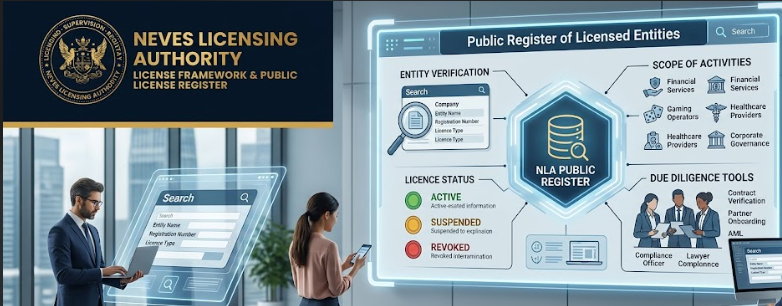
The NLA maintains a public register of licensed entities that consumers can access freely. This register allows anyone to verify whether a business is genuinely licensed, what it is licensed to do, and whether its licence is currently active or has been suspended or revoked.
For consumers, this is a practical and powerful tool. Before engaging with a business in a regulated sector, a quick check of the public register can confirm whether the business has the authority it claims to have. In sectors where unlicensed operators pose a genuine risk, this verification step can protect consumers from significant harm.
How the NLA Responds When Consumer Harm Occurs
Investigation and Enforcement
When consumer harm occurs as a result of a licensed business breaching its obligations, the NLA has the authority to investigate and take enforcement action. This process begins with gathering evidence, interviewing relevant parties, and assessing the nature and extent of the breach.
Enforcement outcomes can range from formal warnings and corrective action requirements to financial penalties, suspension, or revocation of the licence. The severity of the response reflects the seriousness of the harm caused, whether the conduct was deliberate or negligent, and whether the business has a prior record of compliance failures.
Suspension and Revocation as Consumer Protection Measures
Licence suspension and revocation are often thought of as penalties imposed on businesses. But their most important function is as consumer protection measures. When the NLA suspends or revokes a licence, it is removing a business from the regulated market because it has concluded that allowing that business to continue operating poses an unacceptable risk to the people it serves.
This is one of the most direct and powerful tools the NLA has to protect consumers. Businesses that consistently fail to meet required standards are not permitted to continue operating under the authority of a licence, which limits their ability to hold themselves out as regulated operators and removes the legitimacy that the licensing system would otherwise lend to their activities.
Working With Other Authorities
Consumer harm in regulated sectors sometimes involves conduct that falls within the jurisdiction of other authorities, such as trading standards bodies, financial regulators, or law enforcement agencies. The NLA works alongside these bodies when the conduct of a licensed business raises concerns that extend beyond licensing matters alone.
This joined-up approach ensures that consumers are protected not just through the licensing framework but through the full range of regulatory and legal tools available. Information sharing between the NLA and other authorities means that a business engaging in harmful conduct is less likely to escape scrutiny simply because the primary evidence sits with a different regulatory body.
Transparency as a Foundation for Consumer Trust
Publishing Enforcement Outcomes
The NLA publishes information about significant enforcement actions, including suspensions, revocations, and penalties imposed on licensed businesses. This transparency serves consumer protection in a direct way. It alerts consumers to businesses that have been found to have breached their obligations and helps them make informed decisions about who they choose to deal with.
It also sends a clear signal to the market as a whole. Licensed businesses can see that enforcement actions are visible and public, which reinforces the incentive to maintain compliance rather than risk reputational damage alongside formal consequences.
Educating Consumers About Their Rights
Consumer protection through regulatory supervision is most effective when consumers understand the system that exists to protect them. The NLA plays a role in educating the public about what licensing means, what rights consumers have when dealing with licensed businesses, and how to use tools like the public register.
This education function is not always visible, but it is genuinely important. A consumer who understands that they can check whether a business is licensed, report concerns to the NLA, and expect licensed businesses to meet defined standards of conduct is a consumer who is better equipped to protect themselves and to contribute to the integrity of the system through their own engagement with it.
Final Thoughts
Consumer protection is woven into every aspect of how the NLA operates. From the standards it sets for new licence applicants, to the ongoing supervision it conducts of existing holders, to the enforcement action it takes when harm occurs, the authority exists in large part to ensure that the people who deal with regulated businesses can do so with reasonable confidence.
That confidence is not automatic. It has to be earned and maintained through consistent, rigorous, and transparent regulatory supervision. When the NLA does its job well, consumers benefit from it every time they engage with a licensed business, usually without even knowing that the protection is there.