Running a business that operates across more than one regulated industry is not simple. When your operations touch multiple sectors, you do not just face one set of rules. You face several, often with overlapping requirements, conflicting timelines, and separate enforcement bodies. This is where Neves multi-sector licensing becomes essential to understand.
Neves has developed a structured approach to regulating businesses that hold licences in more than one sector. Understanding how that system works can save you significant time, money, and compliance headaches.
What Is Multi-Sector Licensing Under Neves?
Defining a Multi Sector Business
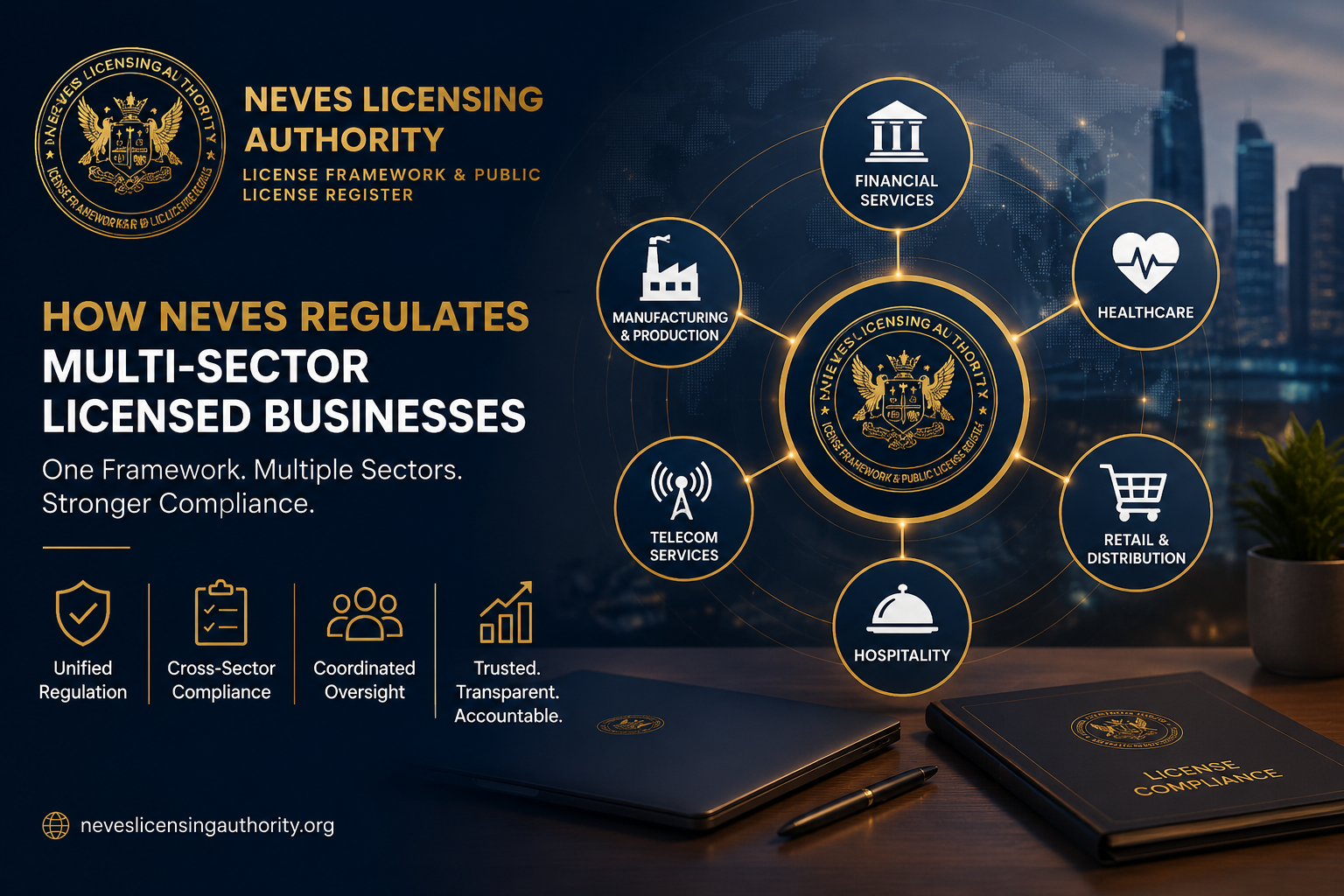
A multi-sector business is any entity that operates in two or more regulated industries simultaneously. This might be a company that provides both financial services and telecommunications, a business that handles food production and retail distribution, or an organisation that operates in healthcare and hospitality at the same time.
Each of those sectors comes with its own licensing body, its own standards, and its own rules. When a single business sits across all of them, the question of who regulates what, and how, becomes genuinely complex.
Where Neves Fits In
Neves acts as a coordinating authority in the multi-sector space. Rather than leaving businesses to navigate each regulatory body independently, Neves provides a unified framework that helps align requirements, reduce duplication, and give multi-sector operators a clearer path through the compliance landscape.
This does not mean Neves replaces the individual sector regulators. It means Neves works alongside them to ensure that businesses holding multiple licences are accountable to a coherent set of standards rather than a fragmented collection of unconnected rules.
How the Neves Multi-Sector Licensing Framework Works
The Consolidated Licence Application Process
One of the most significant features of Neves multi sector licensing is the consolidated application process. Instead of submitting separate applications to each sector regulator independently, qualifying businesses can apply through a unified Neves process that coordinates the review across relevant authorities.
This does not mean a single form replaces everything. It means the Neves framework manages the workflow, communicates with the relevant sector bodies on your behalf, and ensures that your application is reviewed in a coordinated way rather than in isolation.
Cross Sector Compliance Standards
Neves establishes a baseline set of compliance standards that apply across all sectors a business operates in. These cross-sector standards cover areas such as corporate governance, financial reporting, data handling, and consumer protection.
Meeting these baseline standards does not exempt a business from the specific requirements of each individual sector. It simply provides a common foundation that all licensed multi-sector operators must maintain, regardless of which industries they work in.
Designated Compliance Officers
Businesses operating under the Neves multi sector licensing framework are typically required to appoint a designated compliance officer. This individual is responsible for ensuring that the business meets its obligations across all sectors, serves as the primary point of contact with Neves, and coordinates internally to keep all licence conditions current and up to date.
Having a single point of accountability is important in the multi-sector context because it prevents compliance responsibilities from falling through the gaps between different departments or teams within the organisation.
Sector-Specific Rules Still Apply
Neves Does Not Override Individual Regulators
It is important to understand that Neves multi sector licensing does not exempt a business from the requirements of individual sector regulators. If you hold a licence in the financial sector, you still must comply fully with financial sector rules. If you also hold a licence in the healthcare sector, healthcare regulations apply in full.
What Neves does is coordinate and consolidate the oversight process. It does not dilute the standards set by any individual regulatory body.
How Conflicts Between Sector Rules Are Handled
Occasionally, the rules of two different sectors may appear to conflict with each other. For example, data handling requirements in one sector might differ from data handling requirements in another. When this happens, Neves provides guidance on how to reconcile the conflicting obligations.
In most cases, the stricter of the two requirements applies. Neves works with the relevant sector bodies to issue formal guidance when recurring conflicts are identified, so that multi-sector businesses have a clear and consistent position to follow.
Reporting and Auditing Under the Multi Sector Framework
Unified Reporting Requirements
One of the practical advantages of operating under Neves multi sector licensing is the unified reporting structure. Rather than producing separate compliance reports for each sector regulator on different schedules, businesses can submit consolidated reports through the Neves framework that are then distributed to the relevant authorities.
This reduces the administrative burden significantly, particularly for businesses operating in three or more sectors, where independent reporting cycles could otherwise consume enormous amounts of time and resource.
Multi Sector Audits
Neves has the authority to conduct multi-sector audits of licensed businesses. These audits are designed to assess overall compliance across all sectors at once, rather than requiring a business to undergo separate audits from each individual regulator in sequence.
A multi-sector audit covers governance structures, financial records, operational procedures, and sector-specific compliance in a single coordinated review. Businesses that perform well in these audits benefit from streamlined renewal processes and reduced scrutiny in subsequent periods.
What Triggers an Unscheduled Audit
Not all audits are planned in advance. Neves may initiate an unscheduled audit if a complaint is received, if a discrepancy appears in submitted reports, if a business undergoes a significant change such as a merger or acquisition, or if activity in one sector raises concerns that could have implications across others.
Being audit-ready at all times is one of the core expectations of holding a multi-sector licence under Neves.
Licence Renewals Across Multiple Sectors
Coordinated Renewal Timelines
One of the more practical challenges for multi-sector businesses is managing licence renewals when each sector operates on a different schedule. Neves addresses this through coordinated renewal timelines, where possible aligning the renewal dates of different sector licences so they can be processed together.
This is not always achievable from the outset, particularly for businesses that acquired licences at different times. However, Neves works with applicants over time to bring renewal cycles into alignment, reducing the ongoing administrative complexity.
What Happens When One Licence Lapses
If a licence in one sector lapses while others remain active, the consequences can extend beyond that single sector. Under the Neves multi-sector licensing framework, a lapse in one area can trigger a review of the business’s overall compliance standing, potentially affecting the status of its other licences as well.
This interconnected approach is intentional. It reflects the reality that a failure in one part of a multi-sector operation often has implications for the whole.
Penalties and Enforcement in the Multi-Sector Context
How Neves Handles Violations
When a multi-sector business breaches the conditions of one or more licences, Neves coordinates the enforcement response across the relevant sector bodies. Penalties can range from formal warnings and corrective action requirements to financial fines, temporary suspension of specific licences, or in serious cases, revocation across all sectors.
The severity of the response depends on the nature of the breach, whether it was isolated or part of a pattern, and how promptly and transparently the business responded when the issue was identified.
The Importance of Self-Reporting
Neves places a strong emphasis on self-reporting within the multi-sector framework. Businesses that identify a compliance issue and report it proactively are treated more favourably than those where the issue is discovered during an audit or following a complaint.
Self-reporting demonstrates good faith and a genuine commitment to compliance. It is one of the most effective ways a multi-sector business can protect its overall licensing standing when something goes wrong.
Conclusion
Neves multi-sector licensing is a sophisticated framework built to address a genuinely complex challenge. Businesses that operate across multiple regulated industries face a level of compliance complexity that single-sector operators simply do not encounter. The Neves approach of coordinating oversight, consolidating reporting, and providing cross-sector guidance offers a more manageable path through that complexity.
The key for any multi-sector business is to engage with the framework seriously, appoint capable compliance leadership, stay on top of renewal timelines, and treat self-reporting as a strength rather than an admission of failure. Done well, operating under the Neves multi-sector framework is not just about meeting minimum requirements. It is about building a business that regulators trust and that is built to last