Obtaining a licence in Neves is a regulated process designed to ensure that only credible, compliant, and well governed businesses are authorised to operate. Whether the activity involves financial services, gaming, or corporate services, the Neves licensing framework follows a consistent structure built around eligibility assessment, regulatory review, and formal approval. Understanding each stage of this process helps applicants prepare effectively and improve their chances of success.
Understanding the Neves Licensing Framework
The Neves licensing regime is overseen by the designated regulatory authority responsible for evaluating applications, issuing licences, and supervising licensed entities. Licences are issued based on defined categories, each outlining the scope of permitted activities and corresponding compliance obligations.
Applicants must align their proposed business activities with the correct licence category from the outset, as operating outside the approved scope is not permitted and may result in enforcement action.
Eligibility Requirements for a Neves Licence
Eligibility is the foundation of the Neves licensing process. Before an application is reviewed in detail, regulators assess whether the applicant meets basic legal, financial, and governance standards.
To be eligible for a Neves licence, applicants must generally:
- Establish a legal entity in accordance with Neves corporate law
- Demonstrate a legitimate business purpose
- Maintain transparent ownership and control structures
- Appoint qualified directors and senior management
- Show adequate financial resources to support operations
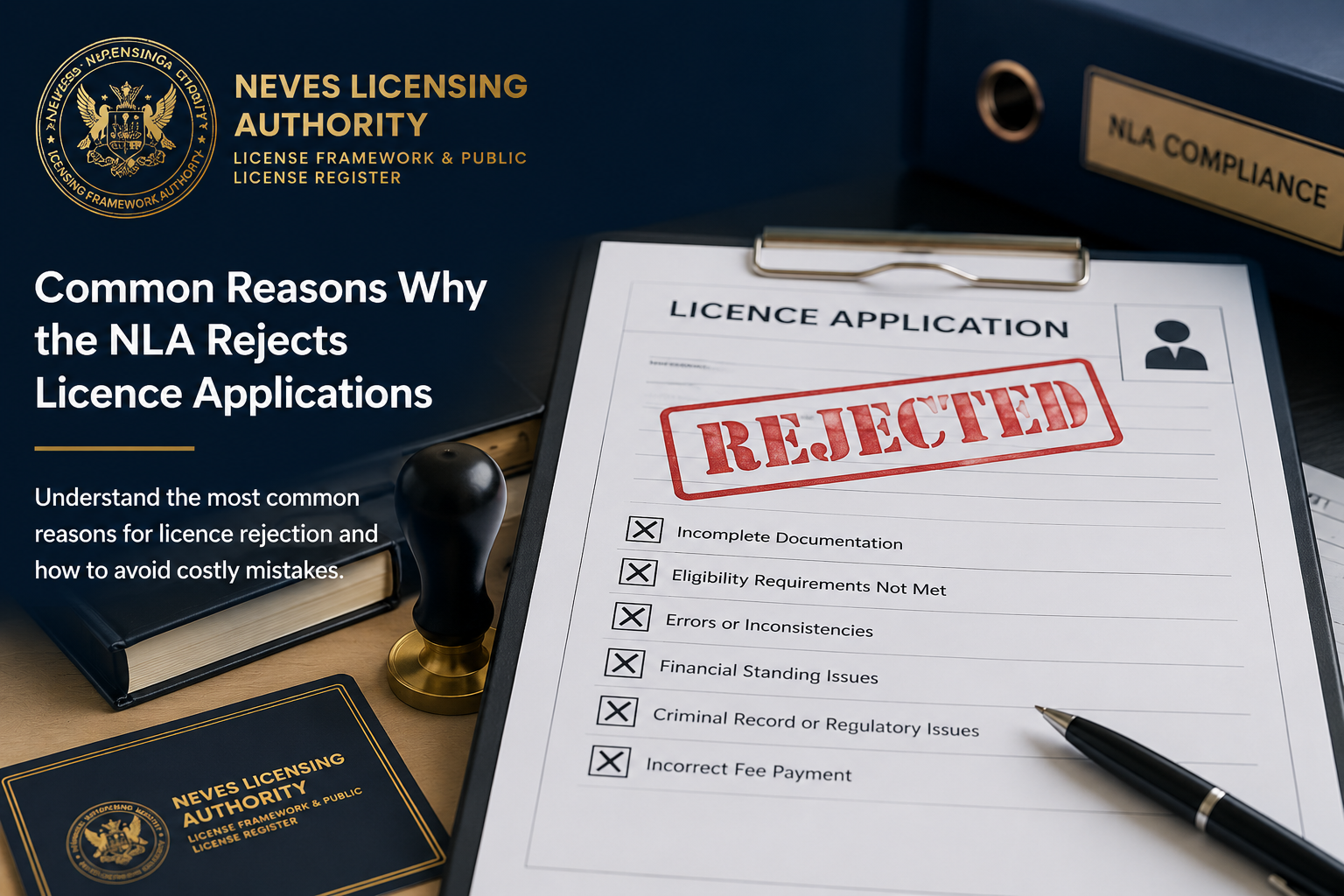
Applications that fail to meet eligibility thresholds may be rejected at an early stage.
Fit and Proper Assessment of Key Individuals
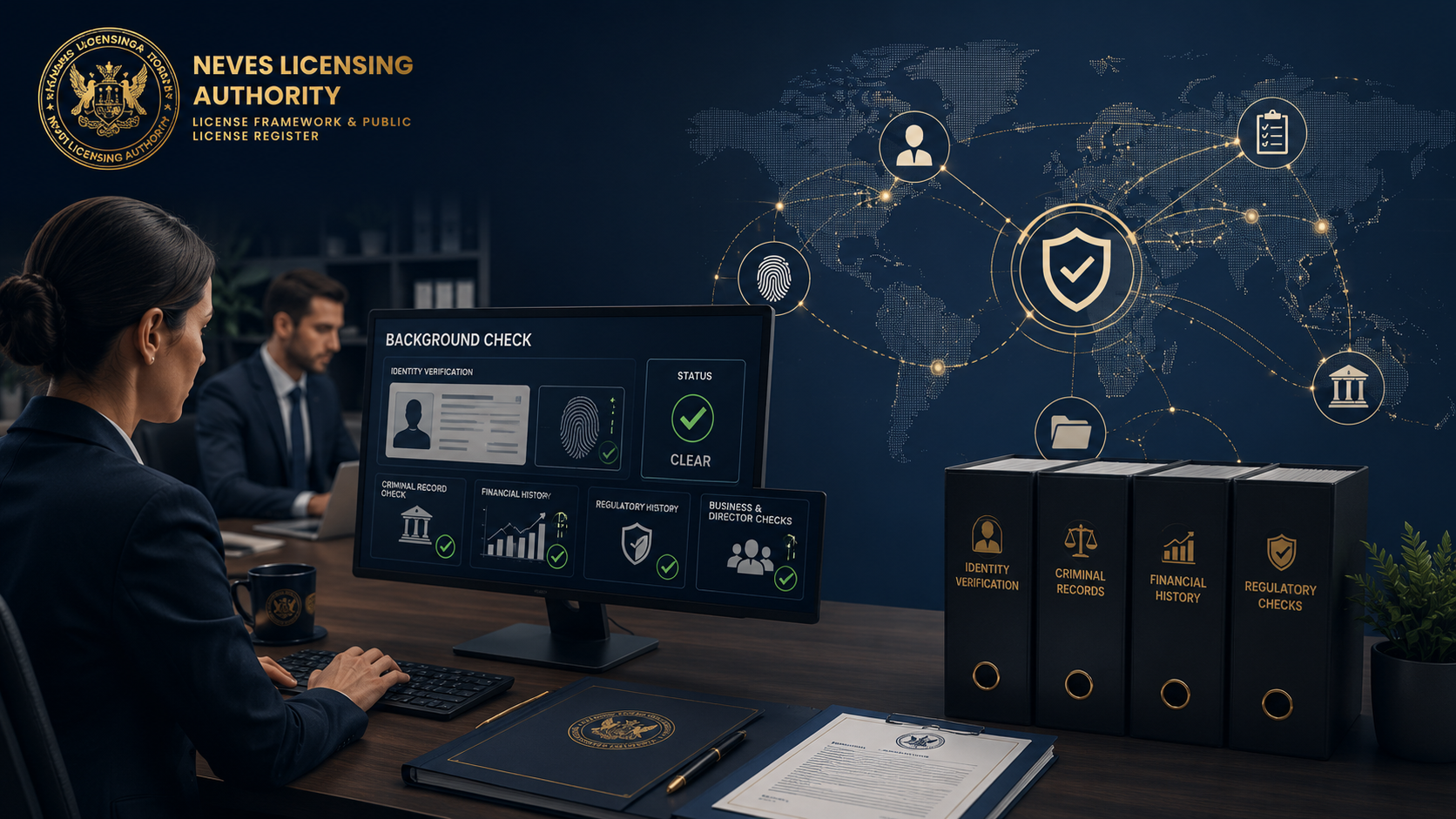
A core requirement for obtaining a Neves licence is the fit and proper assessment of individuals in control of the business. This applies to directors, senior executives, compliance officers, and beneficial owners.
Regulators evaluate professional competence, integrity, financial standing, and regulatory history. The purpose of this assessment is to ensure that licensed entities are managed responsibly and ethically.
Preparing Documentation and Compliance Policies
Comprehensive documentation is essential for demonstrating compliance readiness. Applicants must submit materials that clearly explain how the business will operate, manage risk, and meet regulatory obligations.
Typical documentation includes:
- Corporate incorporation and governance documents
- Detailed business plan and operational model
- AML and KYC policies
- Risk management and internal control frameworks
- Financial projections and capital details
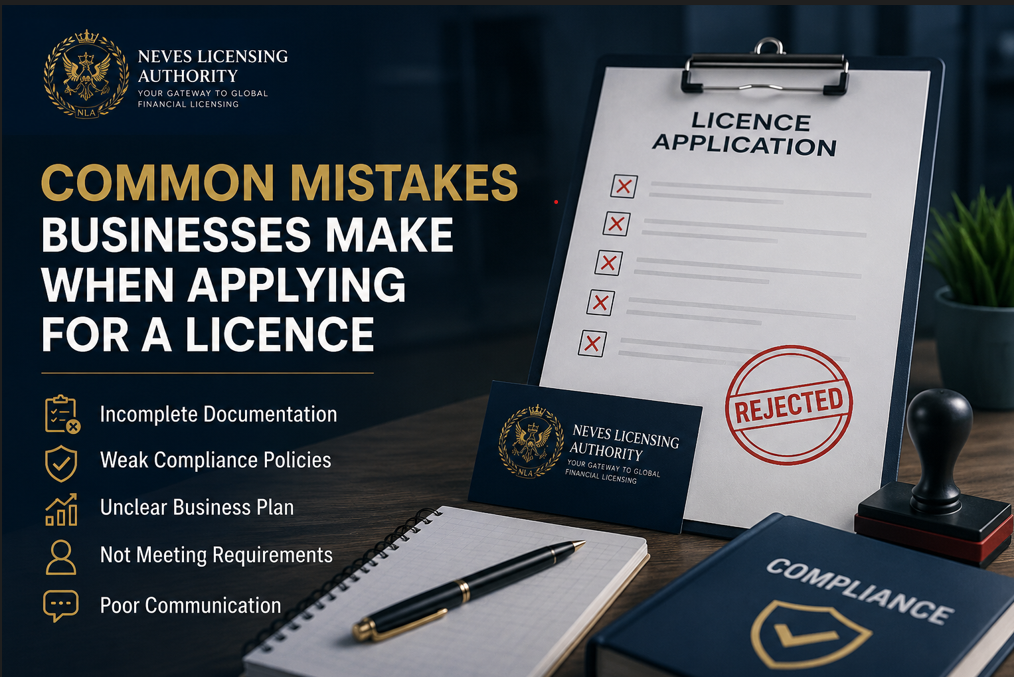
Incomplete or inconsistent documentation can delay the review process.
Submitting the Application Through the Neves Licensing Portal
Neves licence applications are submitted through the official Neves Licensing Portal. This digital platform centralises all regulatory interactions, including document submission, correspondence, and status tracking.
Once submitted, applicants receive an application reference number and can monitor progress while responding to regulatory requests directly through the portal.
Regulatory Review and Due Diligence
After submission, the licensing authority conducts a detailed regulatory review. This stage focuses on due diligence, operational readiness, and compliance capability. Regulators assess whether the applicant’s systems, controls, and governance arrangements meet statutory standards.
During this phase, additional information or clarification may be requested. Timely and transparent responses help maintain application momentum.
Approval, Conditional Approval, or Refusal
Following the review, the authority issues a formal decision. Applications may be approved, approved subject to conditions, or refused. Conditional approvals typically require applicants to implement specific measures, such as enhanced compliance controls, before commencing operations.
If an application is refused, the regulator provides reasons, allowing the applicant to address deficiencies before reapplying if permitted.
Licence Issuance and Public Registration
Once approved, the Neves licence is issued digitally through the licensing portal. The licence specifies authorised activities, validity period, and compliance obligations. Approved licences are recorded in the public verification register, enabling clients and partners to confirm regulatory status.
Post-Approval Compliance Obligations
Holding a Neves licence involves ongoing regulatory responsibilities. Licensees must comply with reporting requirements, maintain compliance frameworks, and notify regulators of material changes.
Key obligations include:
- Periodic financial and compliance reporting
- Maintenance of AML and KYC systems
- Reporting changes in ownership, management, or operations
- Cooperation with inspections and audits
Non-compliance can result in fines, suspension, or licence revocation.
Renewal and Amendments
Neves licences are issued for a defined term and must be renewed before expiry. Renewal requires demonstration of continued compliance. Any changes to licensed activities or corporate structure must be approved in advance through the licensing portal.
Conclusion
Understanding how to get a Neves licence involves careful attention to eligibility, thorough preparation for regulatory review, and ongoing commitment to compliance after approval. By aligning with regulatory expectations and engaging transparently with the licensing authority, businesses can obtain and maintain a Neves licence that supports long-term credibility and operational stability.