

Verifying the authenticity of a licence issued in Neves is a critical step for businesses, partners, investors, and service providers seeking to engage with regulated entities. Neves has established formal verification mechanisms through official records to ensure transparency, regulatory trust, and protection against fraudulent or misrepresented licences. Whether for due diligence, compliance, or commercial assurance, understanding how licence verification works is essential within the framework of corporate licensing Neves.
The Neves licensing system emphasises public accountability and regulatory oversight, allowing stakeholders to independently confirm the legal standing of licensed entities.
Importance of Licence Verification in Neves
Licence verification serves multiple purposes within the Neves regulatory environment. It helps confirm that an entity is legally authorised to conduct regulated activities, ensures that the licence is valid and active, and verifies that the scope of permitted operations aligns with regulatory approval.
Within corporate licensing Neves, verification is especially important for cross-border partnerships, financial transactions, onboarding of vendors, and regulatory compliance checks. Engaging with an unlicensed or improperly licensed entity may expose businesses to legal, financial, and reputational risks.
Accessing Official Neves Licensing Records
Neves maintains official licensing records through its designated regulatory authority. These records form the primary and most reliable source for licence verification. Official registers typically list licensed entities, licence categories, licence status, and validity periods.
To verify a licence under corporate licensing Neves, stakeholders must access these official records rather than relying on self-disclosures, marketing materials, or unofficial databases. Regulatory registers are designed to provide accurate, up-to-date information directly from the licensing authority.
Key Information Required for Verification
To conduct a licence verification, certain basic details are typically required. These may include the legal name of the licensed entity, licence number, registration number, or authorised trading name. In some cases, the jurisdiction of incorporation or licence category may also be relevant.
Accurate identification details ensure precise matching within official records, particularly where similar company names exist. Within corporate licensing Neves, regulators emphasise exact legal naming conventions to prevent confusion or misrepresentation.
Reviewing Licence Status and Scope
Once the relevant record is located, verification involves reviewing the licence status and permitted scope of activities. Official records usually indicate whether the licence is active, suspended, expired, or revoked. They may also specify the regulated activities the entity is authorised to conduct.
For corporate activities governed by corporate licensing Neves, verifying scope is as important as verifying validity. An entity may hold a valid licence but operate outside its approved regulatory permissions, which can still pose compliance risks.
Verifying Corporate Details and Ownership
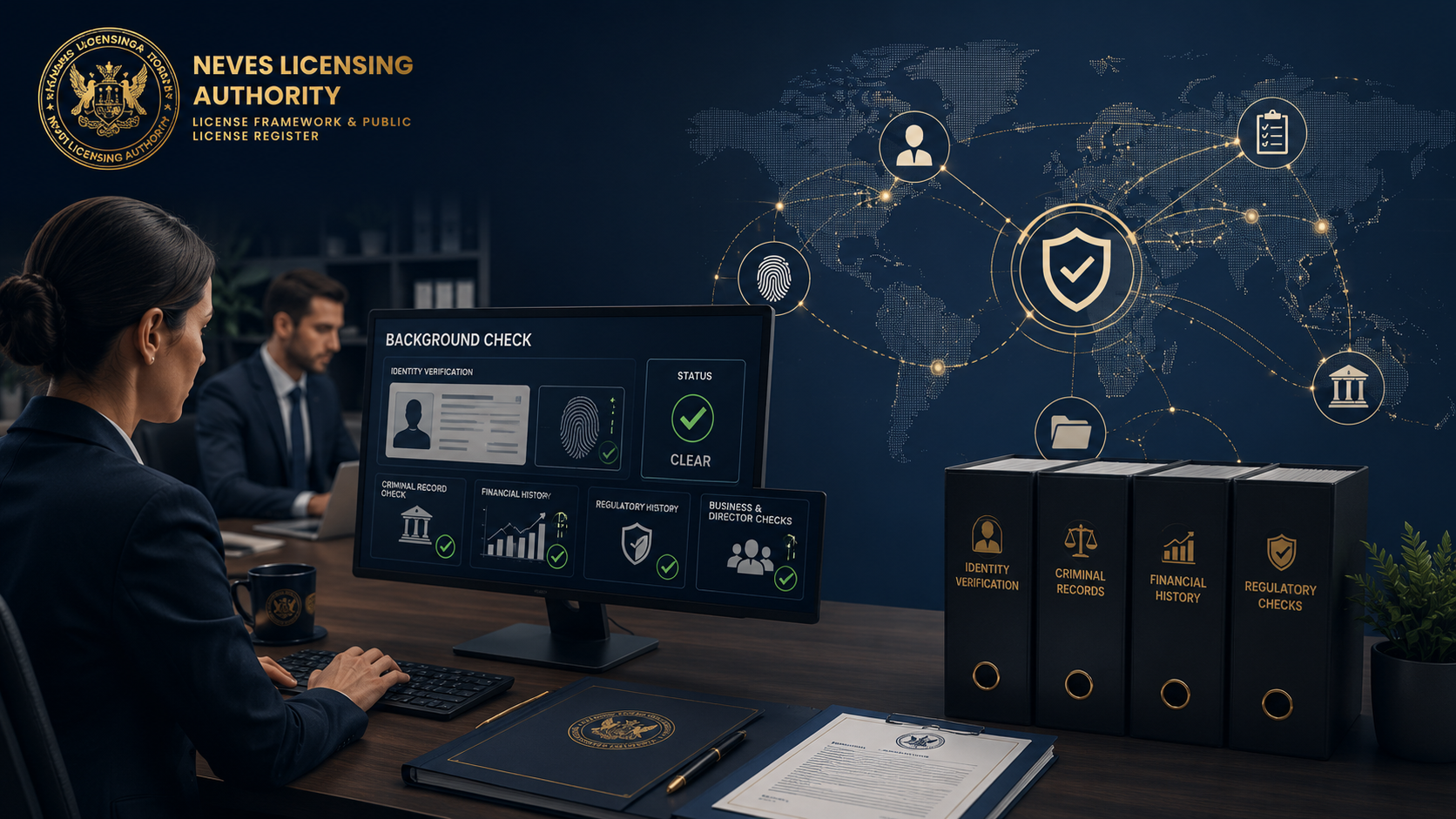
Licence verification in Neves often includes confirmation of corporate details associated with the licensed entity. Official records may display registered office address, incorporation status, and, where applicable, details of beneficial ownership or authorised representatives.
This level of transparency supports due diligence processes and aligns with international governance standards. In the context of corporate licensing Neves, verifying ownership structures is particularly relevant for compliance with Anti-Money Laundering (AML) and Counter-Terrorist Financing (CFT) obligations.
Cross-Checking Regulatory Consistency
Effective licence verification involves cross-checking information across multiple official records where applicable. This may include comparing licensing records with corporate registries, regulatory filings, or public notices issued by the licensing authority.
Neves regulators encourage consistency across all official disclosures. Any discrepancies identified during the verification process should be treated as potential red flags and may warrant further inquiry within the corporate licensing Neves framework.
Requesting Regulatory Confirmation
In cases where online records are insufficient or clarification is required, stakeholders may request formal confirmation from the Neves licensing authority. Such requests are commonly used in high-value transactions, institutional partnerships, or regulatory audits.
Regulatory confirmation may include written verification of licence validity, scope, and standing. This process further strengthens trust in corporate licensing Neves and provides documented assurance for compliance records.
Monitoring Licence Updates and Changes
Licence verification should not be treated as a one-time exercise. Neves regulators update official records to reflect changes such as renewals, amendments, suspensions, or enforcement actions. Ongoing monitoring is therefore recommended, particularly for long-term partnerships or service relationships.
Within corporate licensing Neves, continuous monitoring supports proactive risk management and helps businesses respond promptly to regulatory changes affecting licensed entities.
Identifying Red Flags During Verification
Certain indicators may signal potential concerns during the verification process. These include missing records, mismatched corporate details, unclear licence scope, or outdated information. Any claim of licensing that cannot be confirmed through official records should be approached with caution.
Neves regulators discourage reliance on unofficial certificates or screenshots as proof of licensing. Authentic verification under corporate licensing Neves must always be supported by official regulatory records.
Regulatory Transparency and Market Confidence
The ability to verify licences through official records reflects Neves’ commitment to transparency and regulatory integrity. Open access to licensing information strengthens market confidence, supports lawful business operations, and deters fraudulent activity.
For stakeholders operating within or alongside corporate licensing Neves, this transparency provides a reliable foundation for trust-based commercial relationships and regulatory compliance.
Conclusion
Verifying a Neves licence using official records is a structured and essential process within the regulatory framework of Neves. By accessing authoritative registers, reviewing licence status and scope, confirming corporate details, and maintaining ongoing monitoring, stakeholders can ensure that they engage only with properly licensed entities.
Within corporate licensing Neves, licence verification is not merely a procedural step but a critical safeguard that supports compliance, transparency, and long-term business integrity in a well-regulated jurisdiction.