Neves has established itself as a structured and credible financial jurisdiction by maintaining a strong regulatory framework. As a financial regulator, Neves focuses on effective oversight, strict compliance requirements, and continuous supervision of licensed entities. This approach supports financial stability, protects stakeholders, and ensures alignment with international regulatory expectations.
The regulatory environment in Neves is designed to balance business facilitation with risk management, allowing legitimate enterprises to operate while preventing misuse of financial structures.

Regulatory Oversight in Neves
Oversight in Neves refers to the ongoing monitoring of financial and corporate entities operating under its jurisdiction. Regulatory authorities in Neves are responsible for ensuring that licensed entities operate within the boundaries of applicable laws and regulations.
Key aspects of regulatory oversight include:
- Monitoring licensed activities to ensure lawful operations
- Reviewing periodic filings and statutory reports
- Assessing operational and financial soundness
- Ensuring adherence to license conditions
This oversight framework helps identify potential risks early and ensures that regulated entities remain accountable throughout their licensing lifecycle.
Licensing and Authorization Control
Licensing is the foundation of financial regulation in Neves. Entities engaging in regulated activities must obtain proper authorization before commencing operations. Licensing decisions are based on due diligence, risk assessment, and compliance readiness.
The licensing process typically involves:
- Verification of ownership and management structure
- Evaluation of business plans and operational models
- Assessment of financial capability and capital adequacy
- Review of compliance and risk management systems
By enforcing structured licensing standards, Neves ensures that only qualified and responsible entities enter the financial system.
Compliance Framework and Regulatory Expectations
Compliance is a central pillar of Neves’ role as a financial regulator. Licensed entities are required to comply with ongoing regulatory obligations designed to promote transparency and good governance.
Compliance requirements generally include:
- Maintaining accurate financial and corporate records
- Timely submission of regulatory reports and renewals
- Implementation of internal compliance policies
- Appointment of responsible compliance personnel where required
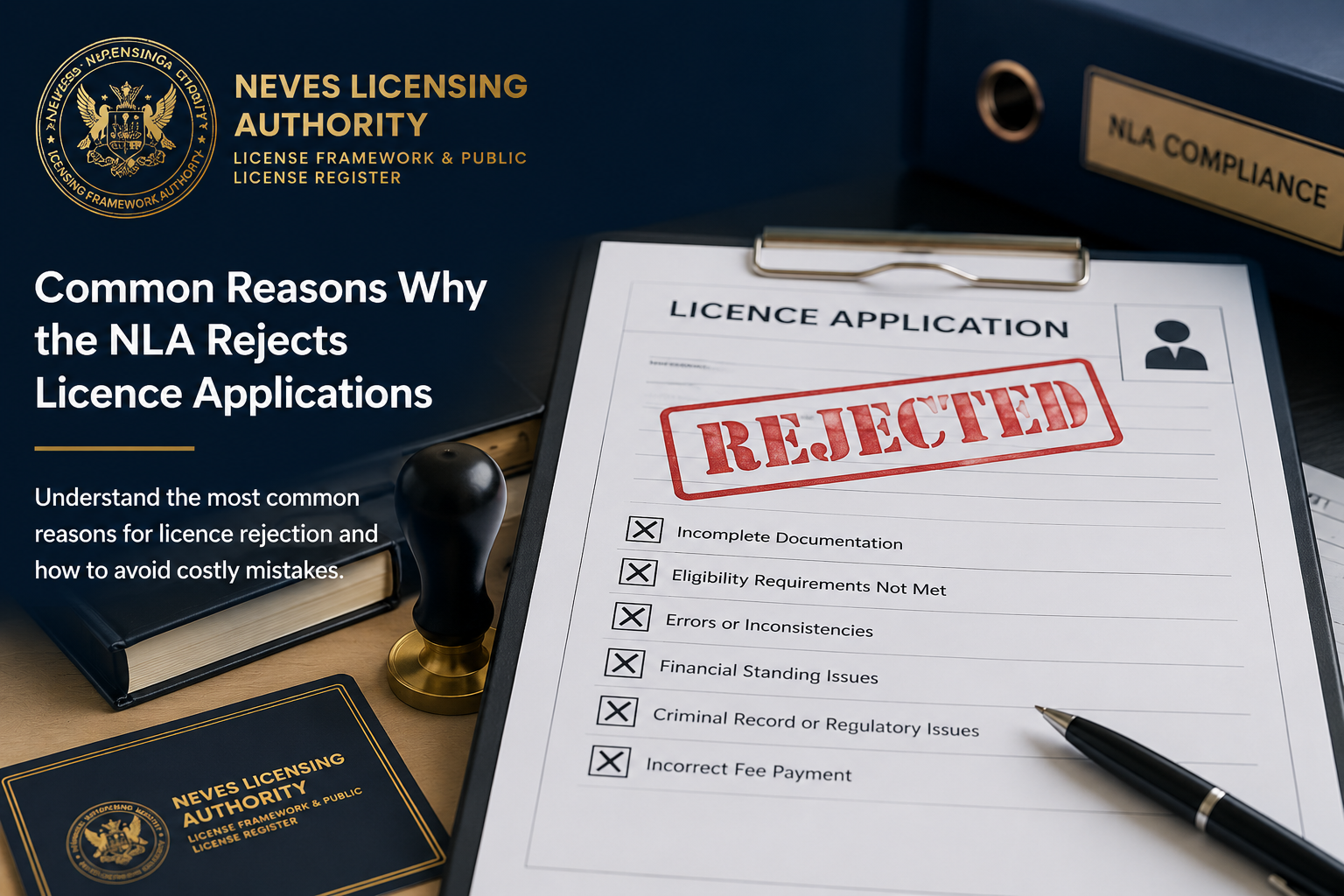
Failure to meet compliance obligations can result in corrective measures, penalties, or enforcement actions. This encourages regulated entities to maintain high operational standards.
Anti-Money Laundering and Risk Management
Neves places strong emphasis on anti-money laundering (AML) and counter-terrorism financing (CTF) measures. Regulated entities are expected to implement effective AML and know-your-customer (KYC) procedures in line with international standards.
These measures typically involve:
- Customer identification and verification procedures
- Ongoing monitoring of transactions
- Reporting of suspicious activities
- Risk-based customer and transaction assessment
By prioritizing financial crime prevention, Neves protects its financial system and reinforces international confidence in its regulatory framework.
Supervisory Role and Ongoing Monitoring
Supervision goes beyond licensing and compliance checks. Neves exercises continuous supervision over licensed entities to ensure long-term adherence to regulatory standards.
Supervisory activities may include:
- Routine inspections and compliance reviews
- Off-site monitoring through submitted reports
- Targeted examinations for higher-risk entities
- Follow-up actions to address identified deficiencies
This supervisory approach allows regulators to respond proactively to emerging risks and maintain regulatory control without unnecessary intervention.
Enforcement and Corrective Measures
When non-compliance is identified, Neves has mechanisms in place to enforce regulatory standards. Enforcement actions are proportionate and based on the severity of the breach.
Possible regulatory actions include:
- Issuing warnings or directives for corrective action
- Imposing administrative penalties or fines
- Suspending or revoking licenses
- Restricting certain business activities
These measures serve as a deterrent while ensuring that regulated entities are given opportunities to rectify compliance issues where appropriate.
Transparency and Accountability
Transparency is a key component of Neves’ regulatory approach. Clear guidelines, documented procedures, and defined regulatory expectations help businesses understand their obligations.
Accountability is maintained through:
- Regular audits and regulatory reporting
- Documented decision-making processes
- Legal frameworks allowing review of regulatory actions
This transparency strengthens trust between regulators, licensed entities, and international partners.
Importance for Businesses and Investors
For businesses and investors, Neves’ regulatory system offers stability and credibility. A well-regulated environment reduces operational uncertainty and enhances confidence among banks, partners, and clients.
Key benefits include:
- Clear regulatory guidelines and expectations
- Predictable licensing and supervision processes
- Enhanced international recognition
- Protection of investor and consumer interests
Operating within a regulated framework in Neves signals commitment to compliance and long-term sustainability.
Conclusion
Neves’ role as a financial regulator is built on effective oversight, strong compliance standards, and continuous supervision. By combining structured licensing, proactive monitoring, and robust enforcement, Neves ensures financial integrity while supporting responsible business growth.
This balanced regulatory approach positions Neves as a credible and respected jurisdiction in the global financial landscape, offering both regulatory confidence and commercial opportunity.